
Shaping Strength and Stillness: Carlos Flores on Craft, Culture, and a Life Worth the Effort
From Voyage Denver. Click here to view on the original publication’s website.
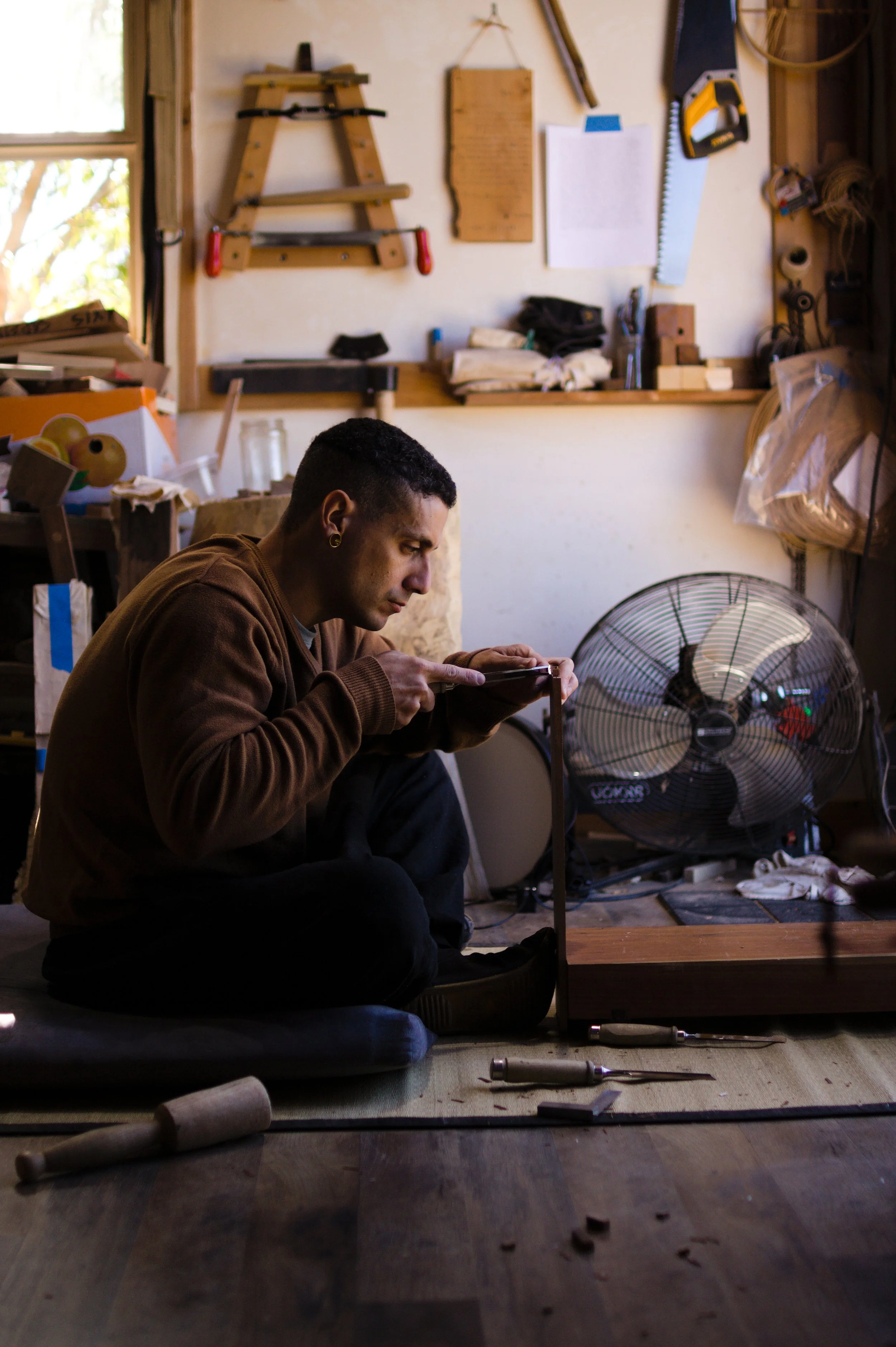
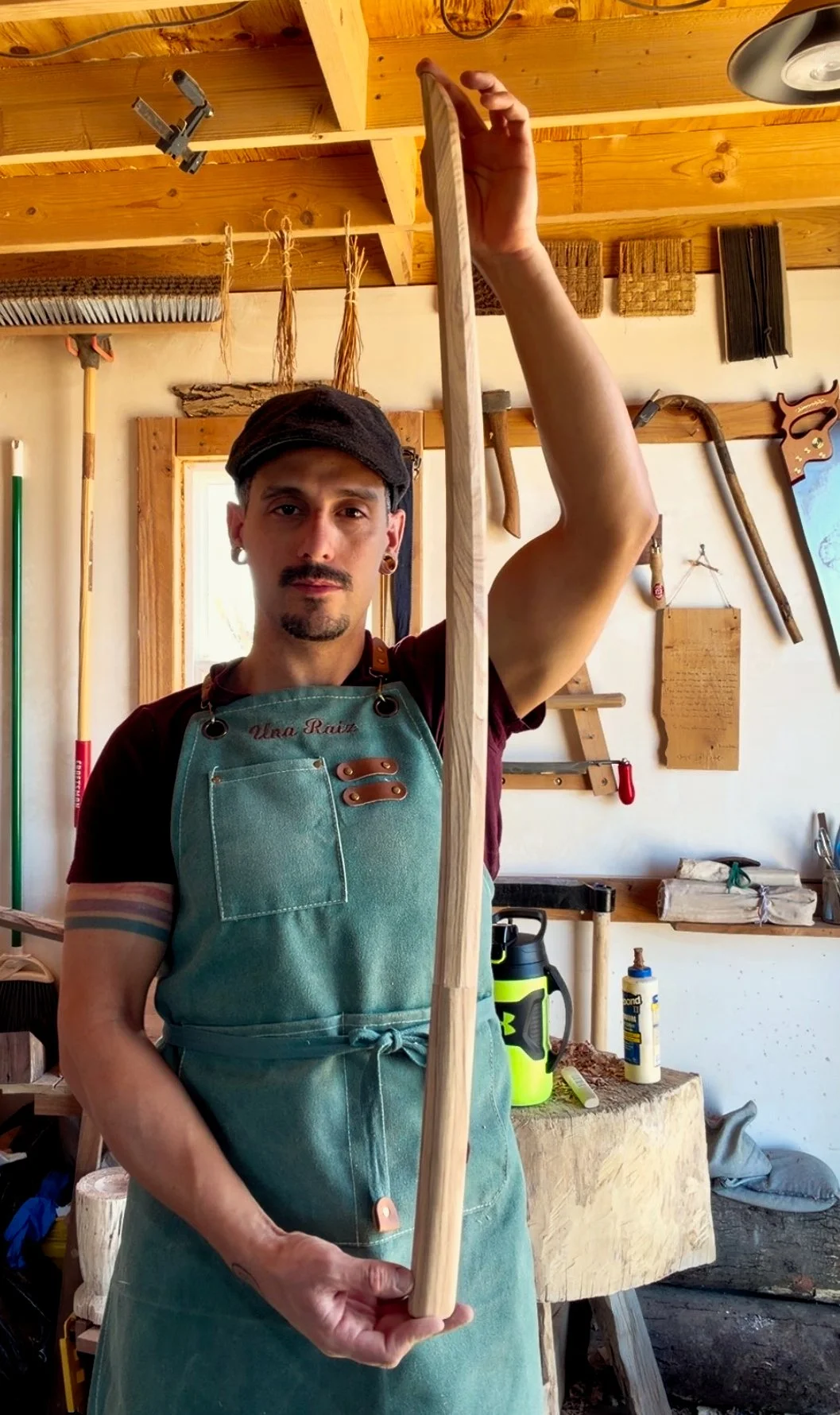
Carlos Flores’ journey into crafting wooden swords began as a personal search for healing, discipline, and connection—one that led him from Japanese woodworking traditions into the practice of judo and ultimately back to himself. Deeply influenced by his Taíno ancestry, his work blends cultural reverence with intentional design, creating pieces that are not just functional but deeply symbolic. Guided by a philosophy that embraces effort as essential to growth, Carlos creates objects that encourage movement, mindfulness, and longevity—inviting people to reconnect with their bodies, their environments, and the quiet power of working with their hands.
Hi Carlos, thank you so much for joining us today and for sharing this thoughtful direction your work is taking. Can you tell us how making wooden swords for martial arts practitioners first came about and what that process has meant to you personally?
My pleasure! My path toward these swords has been a completely unexpected full circle. It all started with studying the traditional use of Japanese woodworking tools a few years ago. While reading Toshio Odate’s classic book, Japanese Woodworking Tools: Their Tradition, Spirit, and Use, I realized that not only had my education in woodworking come with numerous culturally blinded limitations, but also that I had some severe mobility issues that I wanted to work on. I couldn’t even sit on the ground! Much less use my legs and feet as part of my workholding process. I decided that I should pay some respect to my tools by using them as intended, and by knowing their names and how to pronounce them. This led me to start my studies of the Japanese language, which is how Judo came into my radar. At the time, I was also going through some difficult times in my personal life, with various forms of intense grief coming all at once. Along the way, I had lost a lot of confidence and faith. I needed a change. I listened to my intuition and tried my first practice at the Northglenn Judo Club. From the first day, I knew this was where I needed to be. The judo community is incredible. This was the first time I had ever felt welcomed at a sport. Moreover, judo teaches us how to fall. Not just physically, but mentally, there’s a huge impact in understanding that it’s better to fall, and learn, and get up with the newly earned wisdom, than it is to get stiff, trying to be perfect, only to never improve or experience the moment. I believe this practice not only helps me to be a better person, but a better woodworker as well.
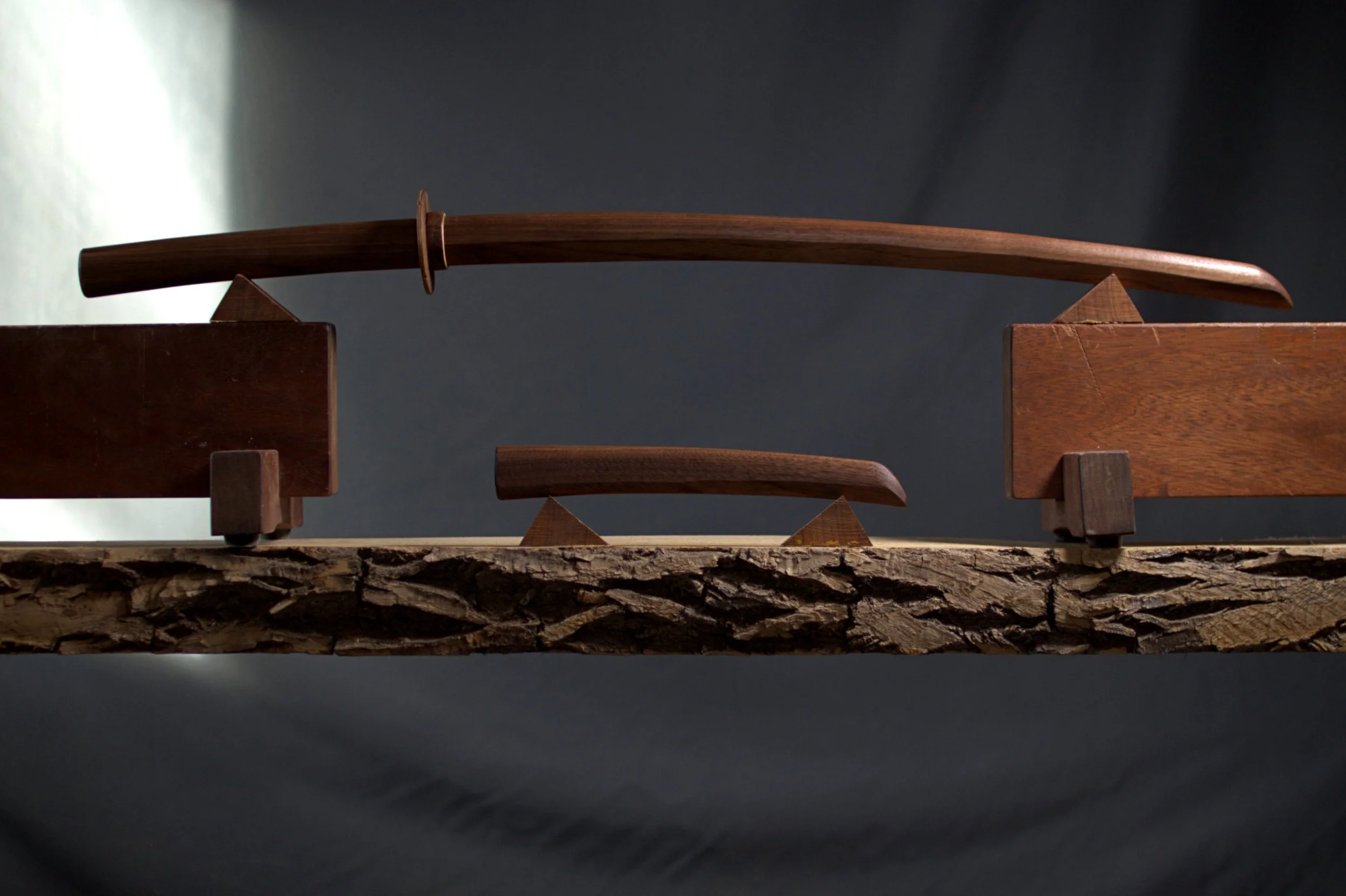
In judo, there is a subsect called kata, where we work toward refining our form. It is within this practice that wooden swords come in—specifically, the bokutō (木刀, katana-style wooden sword) and tantō (短刀, short dagger style). In my first kata class, I happened to mention to one of our sensei that I am a woodworker, to which she responded, maybe you can make me a sword. She has a shorter torso and could never find a bokutō that worked with her body. I knew immediately, this was something I had to do! This community has done so much for me already, and I find great honor in being able to use my skills to give something back.
You mention feeling a deep connection to your Taíno ancestry while working with wood and form. How does exploring heritage and ancient craftsmanship influence the way you design and create today?
My ancestry shows up in everything I do with this medium. I am from Puerto Rico (Borikén), meaning my roots primarily flow from Spain, West Africa, and the indigenous Taíno peoples of Borikén. It was my African ancestors, through the Bomba drum, that freed my heart up so that I could listen to my intuition, and return to woodworking in the first place. And that’s exactly what it felt like—a return. In fact, it wasn’t until I made this decision that I learned woodworking runs in my family, both with relatives still doing fantastic work on the island, and with ancestors who I didn’t get to meet. But I feel them with me when I work, especially when carving, in every chip and shaving. At the moment, I feel the most immediate connection to my Taíno family, although I am certain this will expand as I continue the work of unlearning and relearning. The Taíno were incredible craftsmen. They took stone work to a level of detail and polish that is rather unique in the Americas (I want to say, in the world). As often happens when speaking of indigenous or pre-colonial civilizations, they too often get brushed off, with offhand remarks about the fact that they used “primitive” stone tools. But it doesn’t take much to see that their work is highly sophisticated. Emotive designs that transform dramatically from one vantage point to another, with shapes and symbolism that traverse so fluidly that you usually can’t see where one concept ends and another begins. These are all executed to a high polish, since they (as do I) found special power and significance in achieving a transcendental luminance. Even with modern tools, it would be a feat to achieve what they did.
I believe I carry some of the Taíno’s sense of flow and transmutation within me, and I strive to develop that sense in my designs. I think it lends a feeling of life to my furniture, which usually looks drastically different depending on the viewing angle. My pilones (mortars) take inspiration from the original shape and functionality of their larger historical ones. Even when making my Japanese swords, I feel my ancestors guiding me. This was a surprise when I first started, but it makes sense. The Taíno were known for their macana, wooden sword-like weapons. I am still learning about these. As usual, information is scarce and inconsistent, and I have heard things ranging from they were used specifically to avoid having to kill others in conflict, to these were deadly weapons that the Spanish feared. Either way, they were a peaceful people and any violence was generally performed as self-defense. But there seemed to be a moment of recognition the second I started working on these swords.
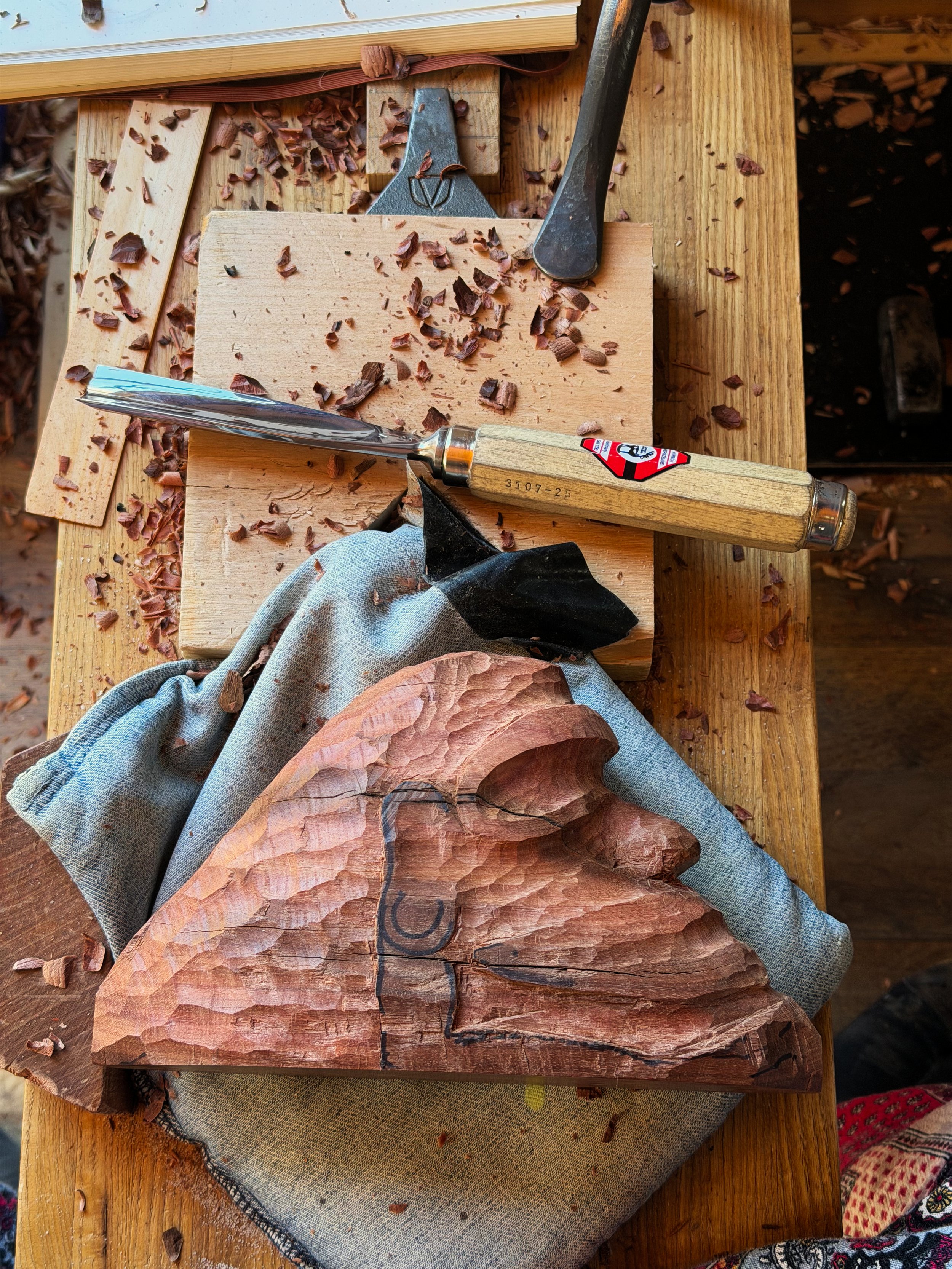
I also do some work specifically to honor the Taíno, bringing in some of their symbolism and concepts. I was recently fortunate enough to receive a very special piece of Ausubo wood from a lovely woodworker friend in Puerto Rico (shoutout to Casa Pestarino!). This piece once formed part of a structural beam of the historic castle-turned-prison in San Juan, La Princesa, and is over 200 years old. Ausubo is a very dense wood (why it’s called “bulletwood” in English), and you can feel the weight of what it has witnessed in this piece. It’s also gorgeous, with a deep reddish-brown color that appears to glow from within when carved with a sharp tool. I knew I needed to make something meaningful, and the Taíno provided the starting point: a cemí of Yukahú. Cemí refers both to divine spirits and to the sculptural pieces that basically serve as portals of communication with these spirits. Yukahú is the spirit of Yuca—in other words, the spirit associated with food, fauna, and flora. The piece I am working on brings in the Taíno’s traditional tri-form of Yukahú representing the cycle of life, and their reverence for kindness, together with my postcolonial perspective, with an intention to say: you can destroy our mountains, hurt our people, claim ownership of our land, and try to erase our history, but we are still here, still creating, still warmhearted, still smiling.
Your philosophy of “not for an effortless life, but for a life worth the effort” is powerful. How does that idea show up in the furniture and objects you’re currently developing?
I came to this philosophy after grappling for a long time with how I can show up as a business owner within a system that often feels disingenuous. Any advice I’ve found centers around manipulating people into becoming customers—finding a sore point in their lives, and claiming to have a solution that will take it away from them. To me, this reeks of the lies told by colonizers in order to facilitate taking their power away from other people. More and more, I have been of the mind that there is no such thing as getting rid of effort. Life is abundance, and effort. You might learn how to focus your efforts to make them as efficient as possible (as in judo); otherwise, there is only the displacement of effort. If we avoid discomfort today, we will pay for it later in life with chronic pain and disease. If I swap out my chisel for a hollow chisel mortiser or my hand saw for a table saw, I change my focus from my direct relationship with the wood to distracting myself with fences and jigs, and hand off the rest of the effort to our struggling planet, so it can pay for my convenience with pollution, with drought and forest fires, and with the lives ruined in the process.
And so in my core, I don’t want to offer people a lie. I want to make things that empower people. I want to make objects that are meant to last someone’s lifetime and longer, so that they can become part of each other’s stories, keep their homes from becoming burdened by pointless clutter, and even have something meaningful to pass on when it’s time. Whether it’s a mortar and pestle that helps you get closer to your food, or a sword that helps you develop your practice, or a seat that encourages a full range of motion, I’m passionate about adding value to people’s lives—not by fostering reliance, but by nourishing and pushing them to grow.
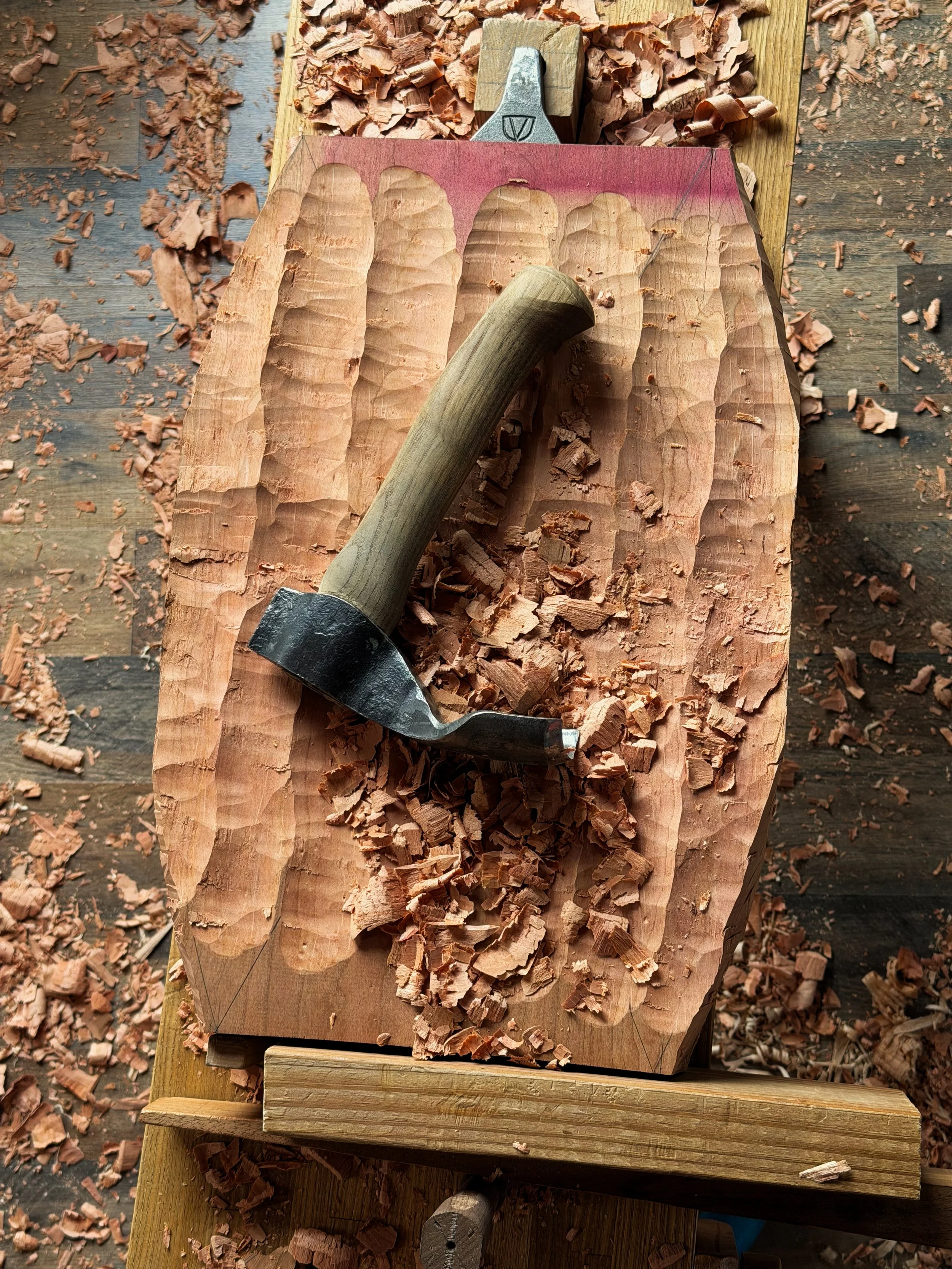
Currently, I’m designing a low stool to help people develop stronger legs and fuller mobility. The shape is inspired by the Taíno’s duho, a hammock-shaped (and often ornate) ceremonial chair, but smaller, simpler, and low to the ground. Modern convention tells us comfort means removing the need for effort. The result is chairs that restrict our movement, shortening our tendons and weakening our legs. My goal with these stools is to achieve a different sort of comfort—one where the furniture provides support in a way that is ergonomic to the human body, while also allowing its user to use their body, and through the effort of squatting low and standing back up, become more attuned to themselves, and stronger and more able.
Mobility, intentional living, and working with the hands seem central to your vision. Why do you feel these elements are especially important in modern life right now?
We are surrounded by a lot of noise, in a daily reality that is more and more isolating and enveloped by screens. Not only that, we are currently experiencing this rise of artificial intelligence, at once making it increasingly difficult to tell what’s real, and encouraging us to think less for ourselves. Mobility, intention, working with our hands, to me these are all anchors that we can all use to keep ourselves grounded and centered. They are methods for finding alignment within ourselves, and of understanding the beauty and power that each of us carries inside. These are things that I felt were missing from my life for too long, and I believe everyone could benefit from.
I think we’ve all been sold on a false idea of efficiency; one where getting things done as quickly as possible, with as little thought or effort as possible, is the pinnacle of being efficient. The result is poor craftsmanship, things that don’t last, and a disconnect from the things we do, along with an absurd amount of waste and a worldwide loss of skills. Personally, I think there’s more value in a board that’s been cut with a handsaw and refined with a plane than one that’s been cut with a tablesaw. The first is a skill that takes years to master and results in a surface that looks alive and feels like glass; the second has a clean result, but the skill to line up a fence and shove a board through a table saw takes all of three seconds to learn, and that feeling of aliveness is missing. A tablesaw then requires another machine to collect harmful clouds of dust, doubling the energy consumption; whereas the waste from my handsaw and handplane fall to the ground, where it can simply be swept away and then used as mulch in my garden.
We’re currently living in a time full of turmoil, and I think we’re seeing what happens when we disconnect from our humanity. My carved stools aren’t going to solve the climate crisis or fix our politics, but I believe in my heart that if each of us could be more in touch with ourselves as physical, spiritual human beings, we could reclaim community, true efficiency and self-reliance, and our planet.
As you continue shifting your focus toward sustainability, accessibility, and hand-tool craftsmanship, what do you hope people experience or take away when they bring your work into their homes or practices?
This is not just a way of working. It’s promoting a healthier, more in tune and mobile way of life. My wish is to pull people back to real. To bring them back to their bodies while making room in their minds to slow down, disconnect from the noise and the artificial intelligence and the illusion of perfection. Remind them of the pleasure of touching something made by human hands, and of experiencing the difference in a craft that takes years to master. These experiences connect the maker and the user for life, reminding us that we are not isolated in vacuums, but part of something bigger. I feel that if I’ve made something that feels as ancient as this craft, but equally fresh and relevant to contemporary life, I’ve done my job. When they return to the room where my work lives, I hope it reminds them to breathe. To see the world around them with a little more clarity, and to understand themselves better. To feel gratitude in their bodies, and express this gratitude by using their bodies. Because when we are well and aligned in body and mind, we make better decisions, treat each other better, and can hope for a better world.
Links:
Website: www.unaraiz.com
Instagram: @unaraizwoodworks
Facebook: www.facebook.com/unaraizwoodworks/
YouTube: www.youtube.com/@UnaRaizWoodworks
