Bosque de Encantos
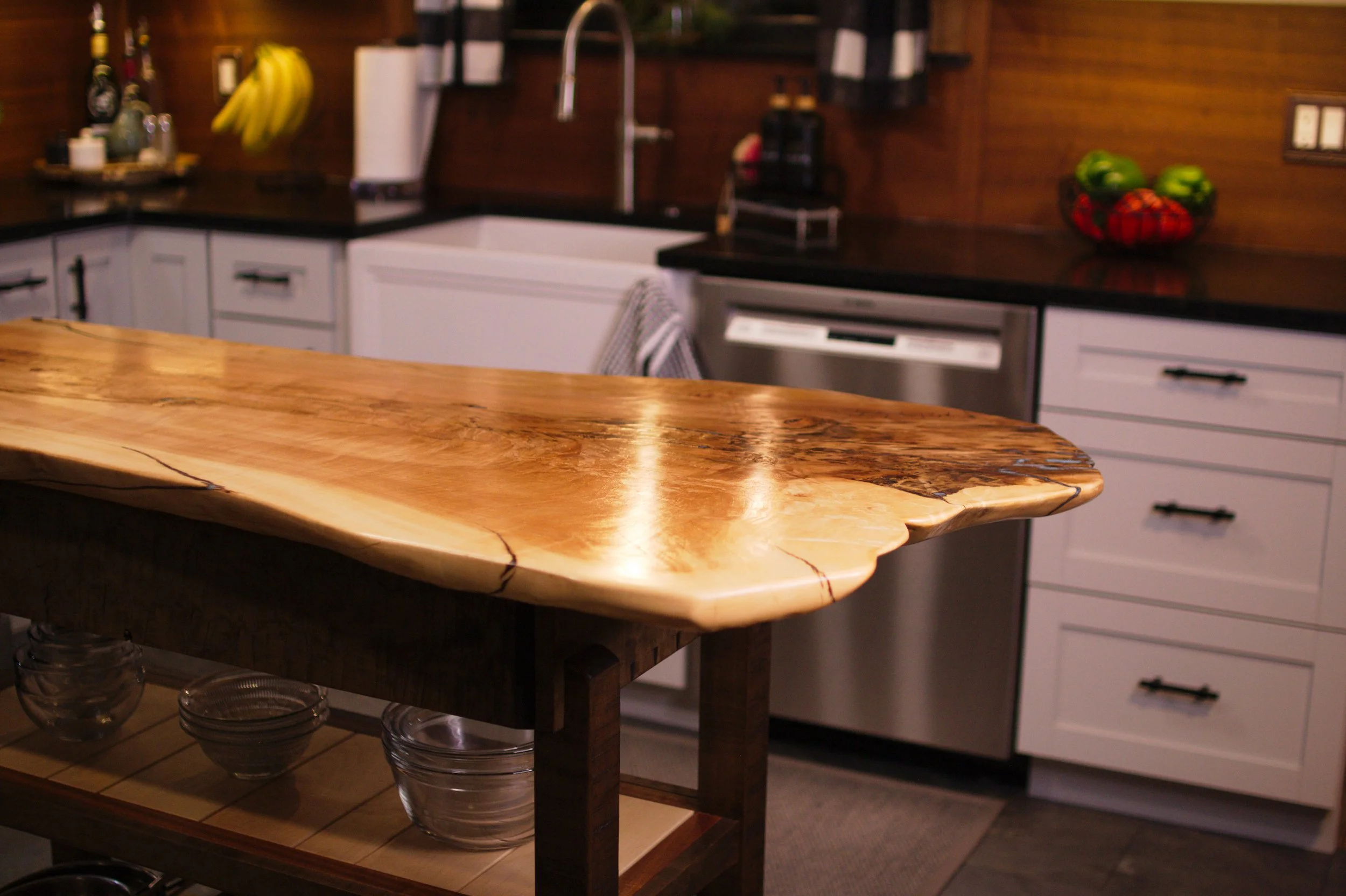
"It looks like it grew right out of the kitchen floor.”
A journey from tree to shop, to an integrated, living piece at home over 2,000 miles away.
In December, my partner and I drove this unique (and sturdy) kitchen island from our home in Colorado to Saratoga Springs, New York. Twenty eight+ hours with the car filled to the brim and the dog on our alternating laps, yelping her usual road trip operettas, is not either of our ideas of a fun time, but this was a special project for a special client—my parents—and the fact that this piece would be particularly tricky to ship presented an additional opportunity to spend the holiday with family. So we took ourselves on an adventure, and are now back home with a better perspective of the sheer breadth of Turtle Island, some stiff spines, and a handful of beautiful maple logs from my parents' yard (did you know there are trees in Ny? They just grow there. Wild).
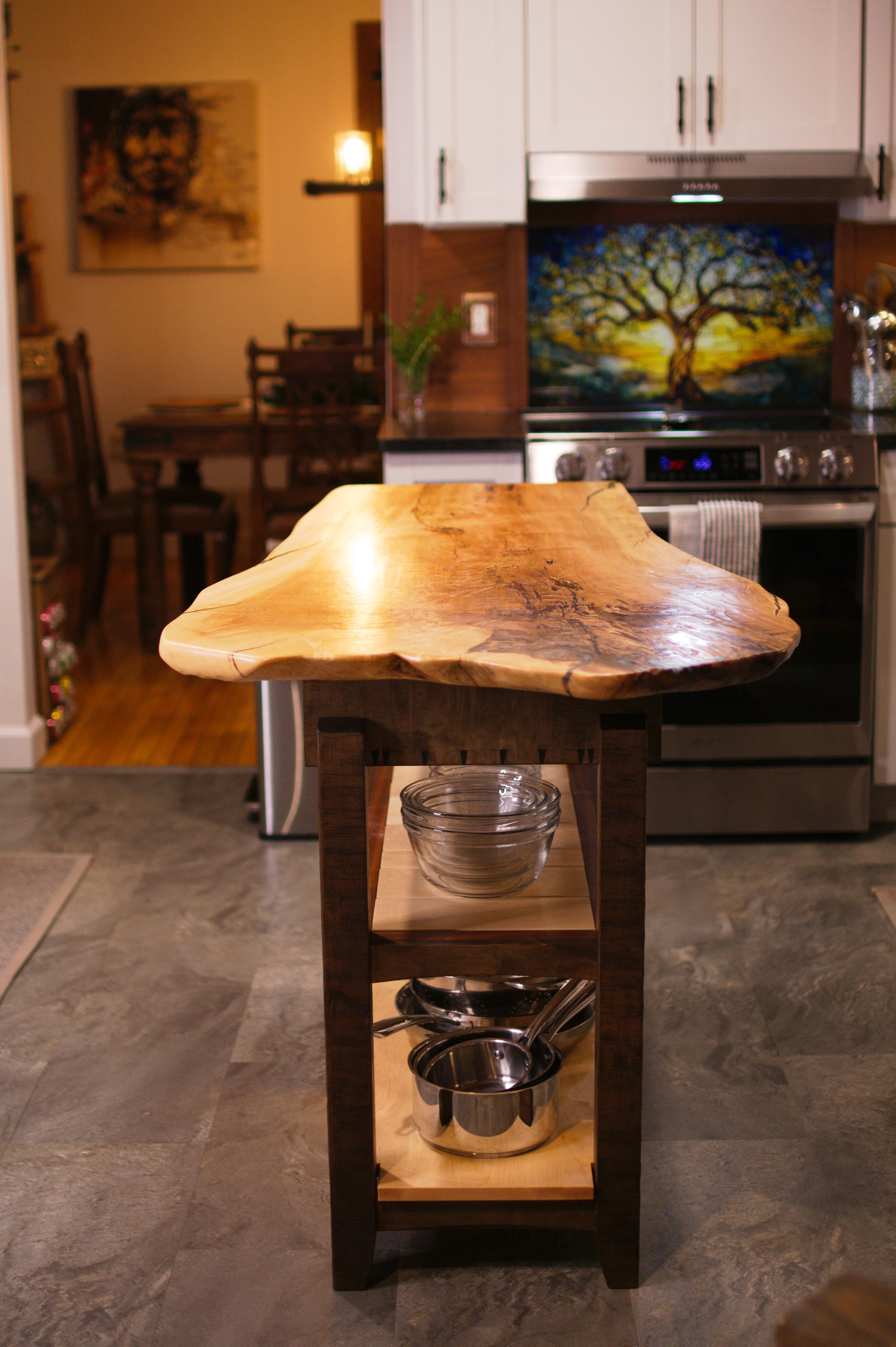
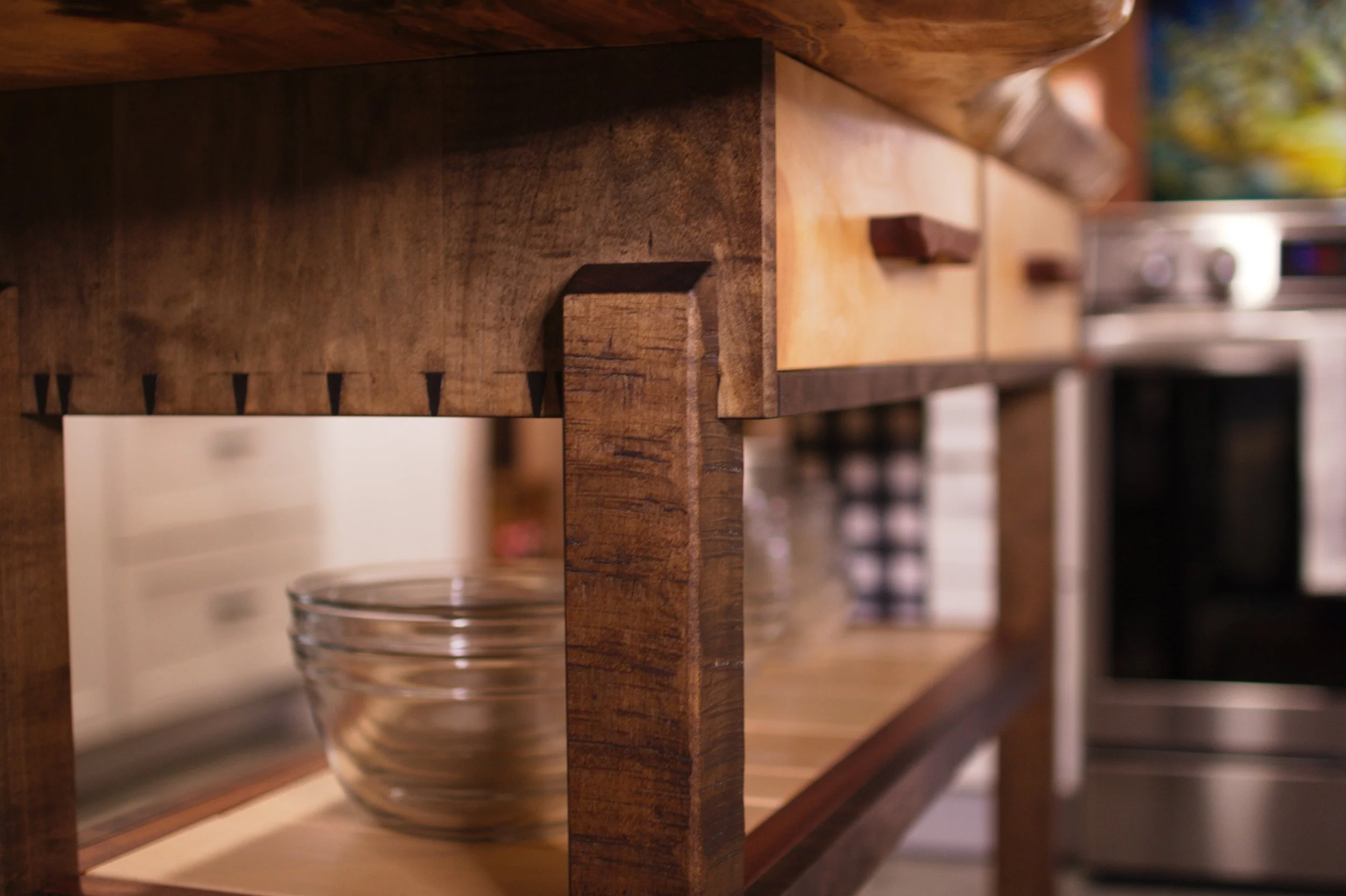
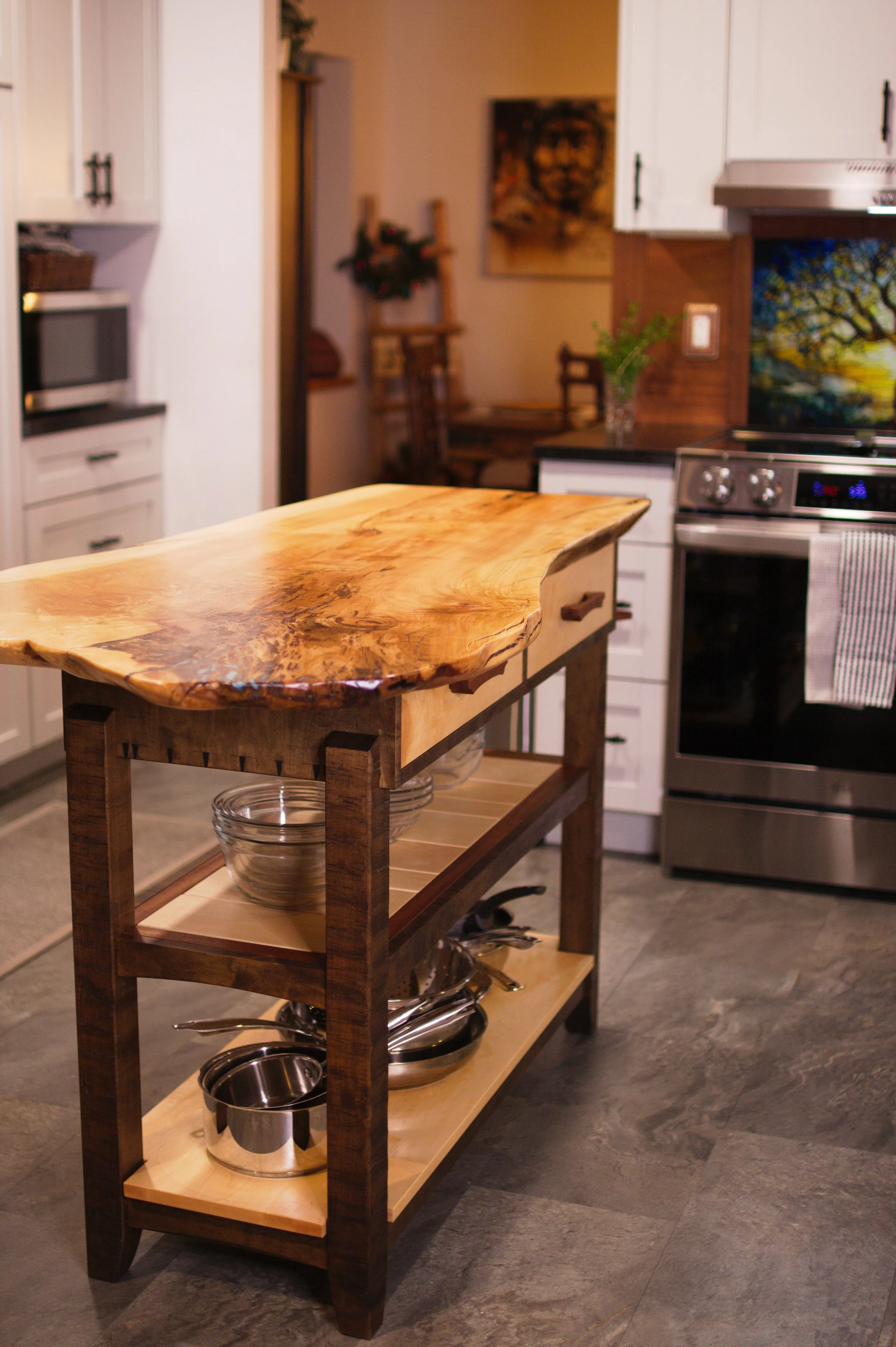
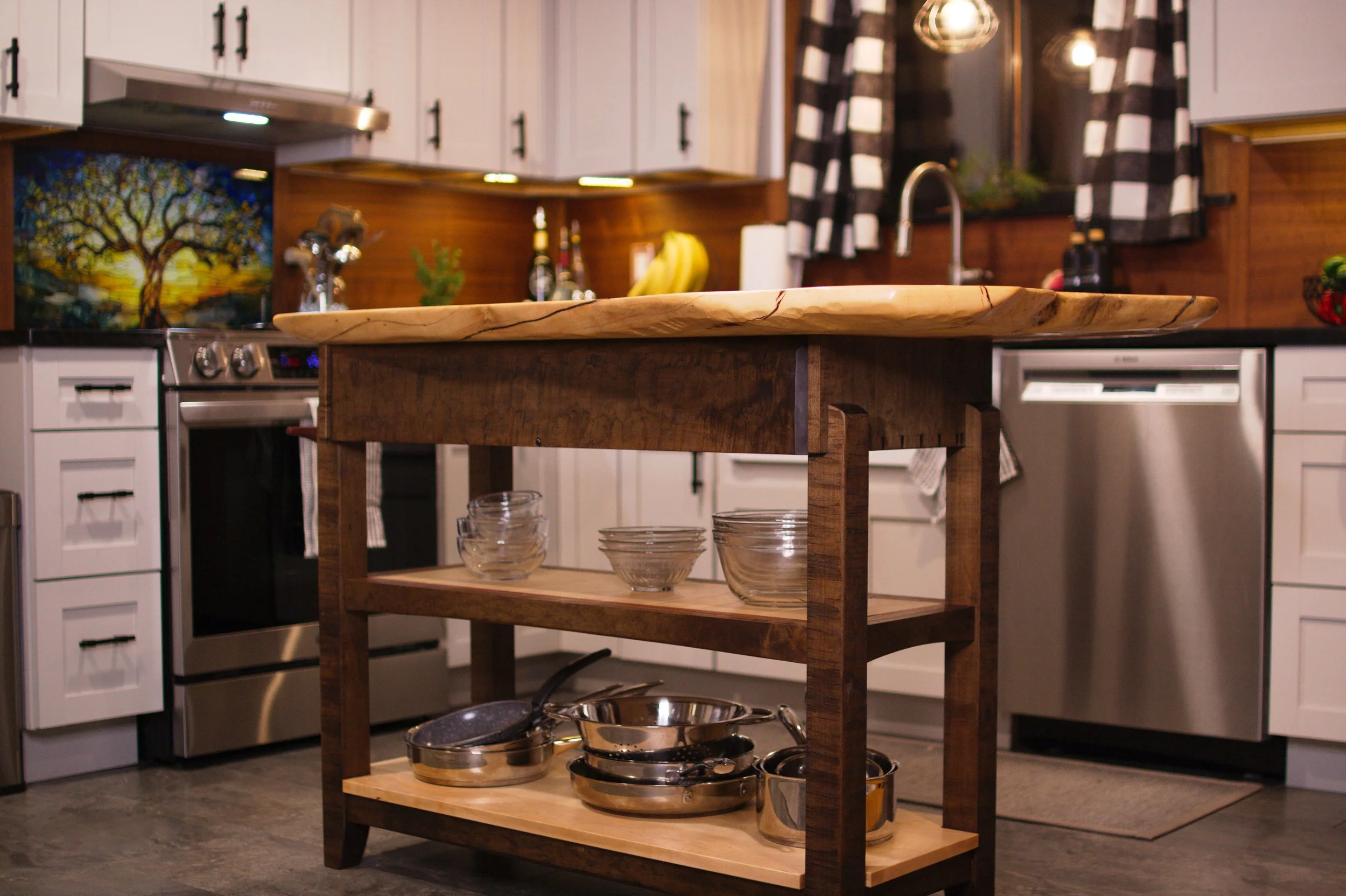
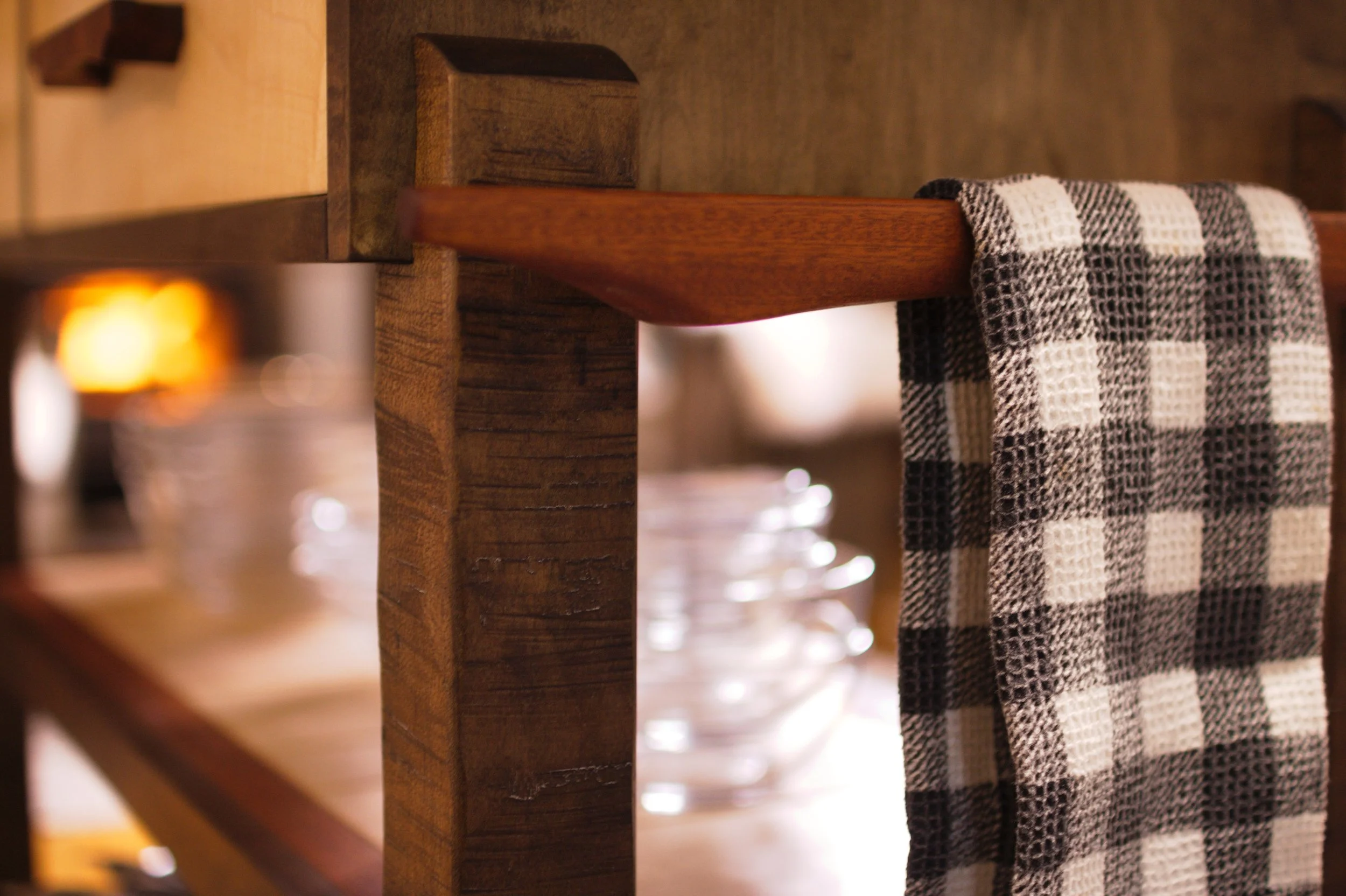
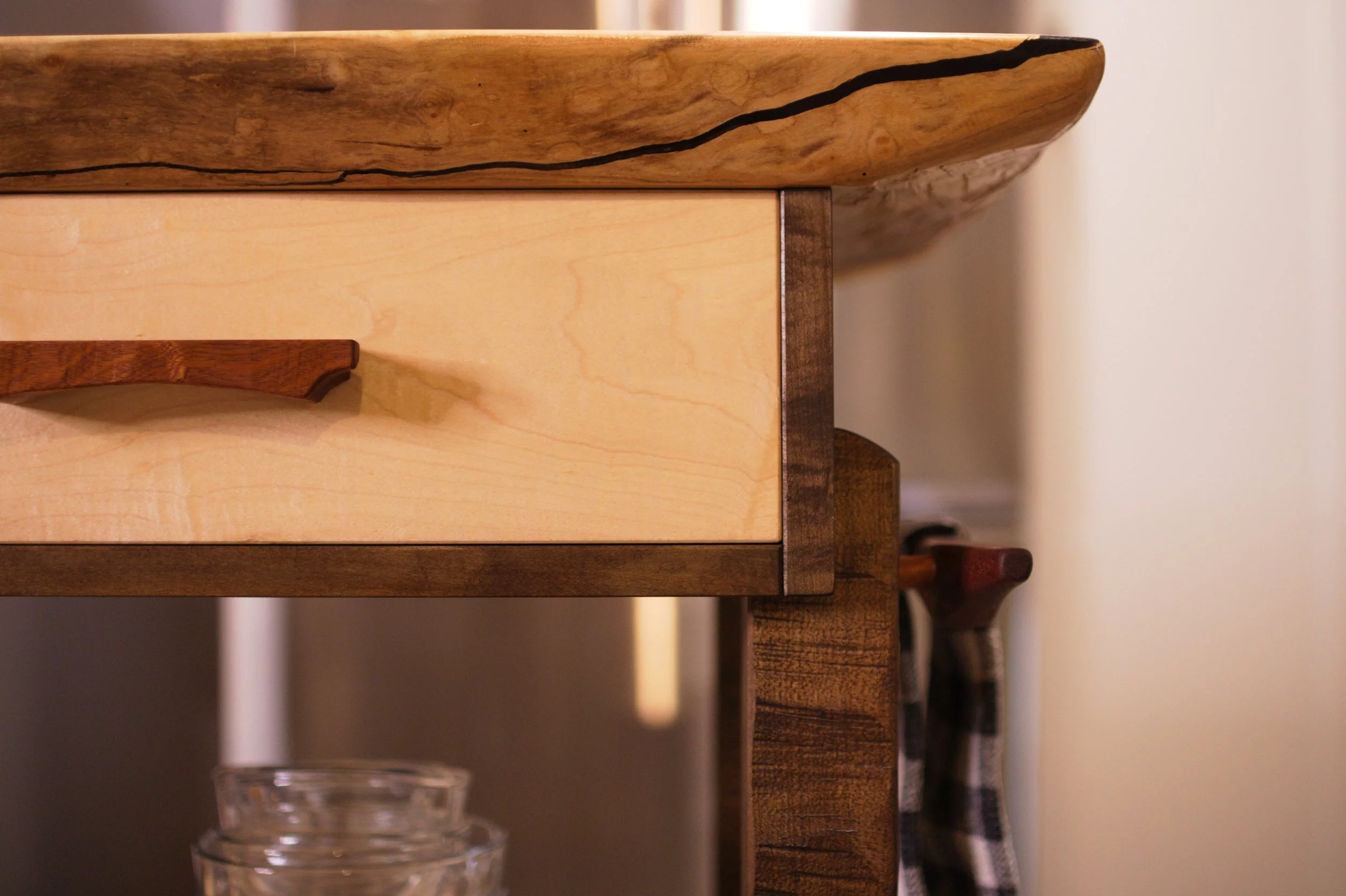
My clients live in a lovely house on a hill, surrounded by a small forest. We often remark on how it feels like a magical wood, and so, we being from la Isla del Encanto, I felt compelled to name this piece Bosque de Encantos (Forest of Enchantments). They have put a lot of work into fixing up the place since moving there, but have done so keeping some of the rustic charm that came with it, and so logically, they wanted the island to feel like a fresh take on rustic. It needed to feel like part of the space, and to pair nicely with the Sapele backsplash that I installed for them last summer, but to stand proud as a centerpiece with a strong artistic presence. In other words, the design was not a small challenge.
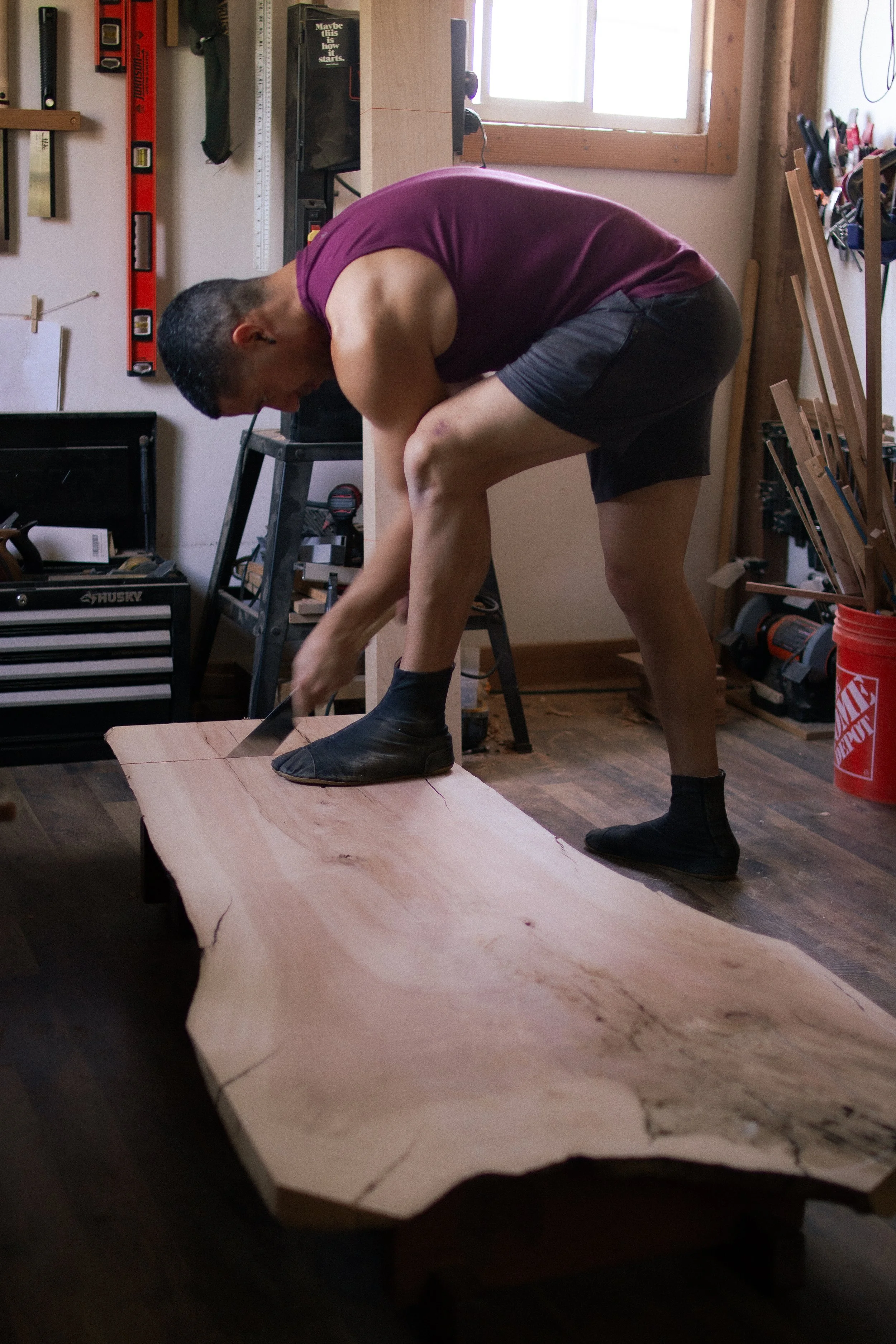
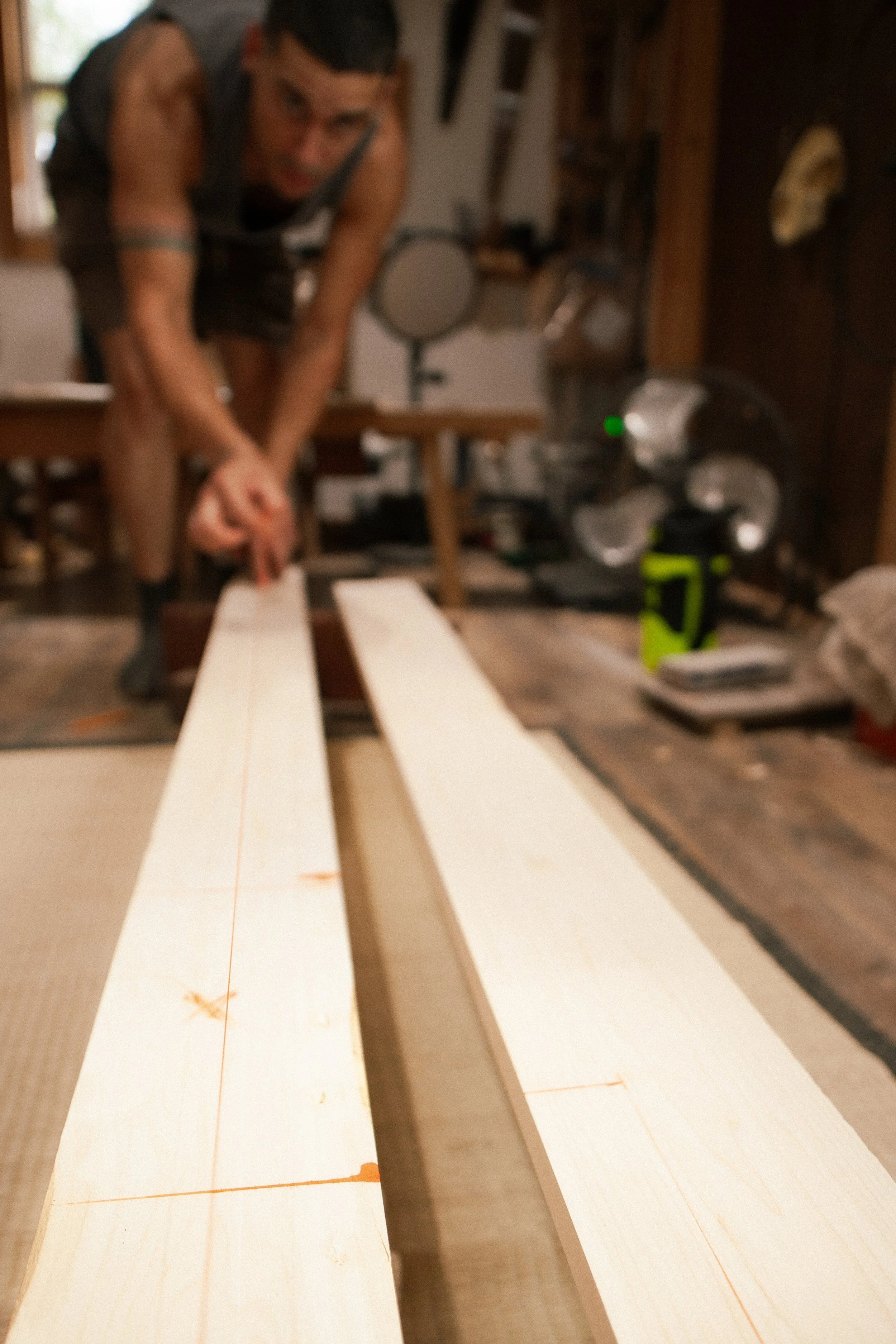
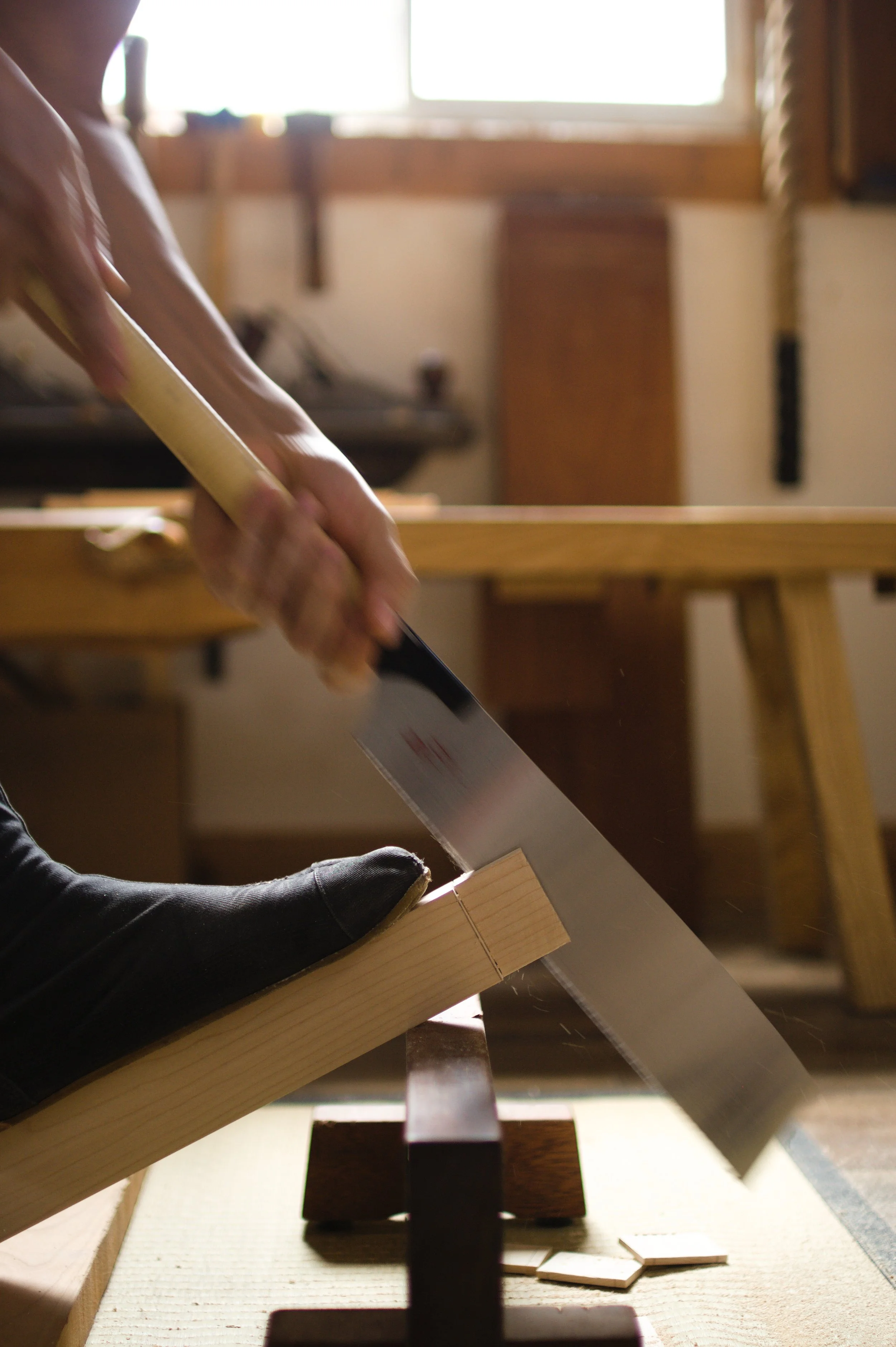
Cutting the Silver Maple top to length with a crosscut kataba.
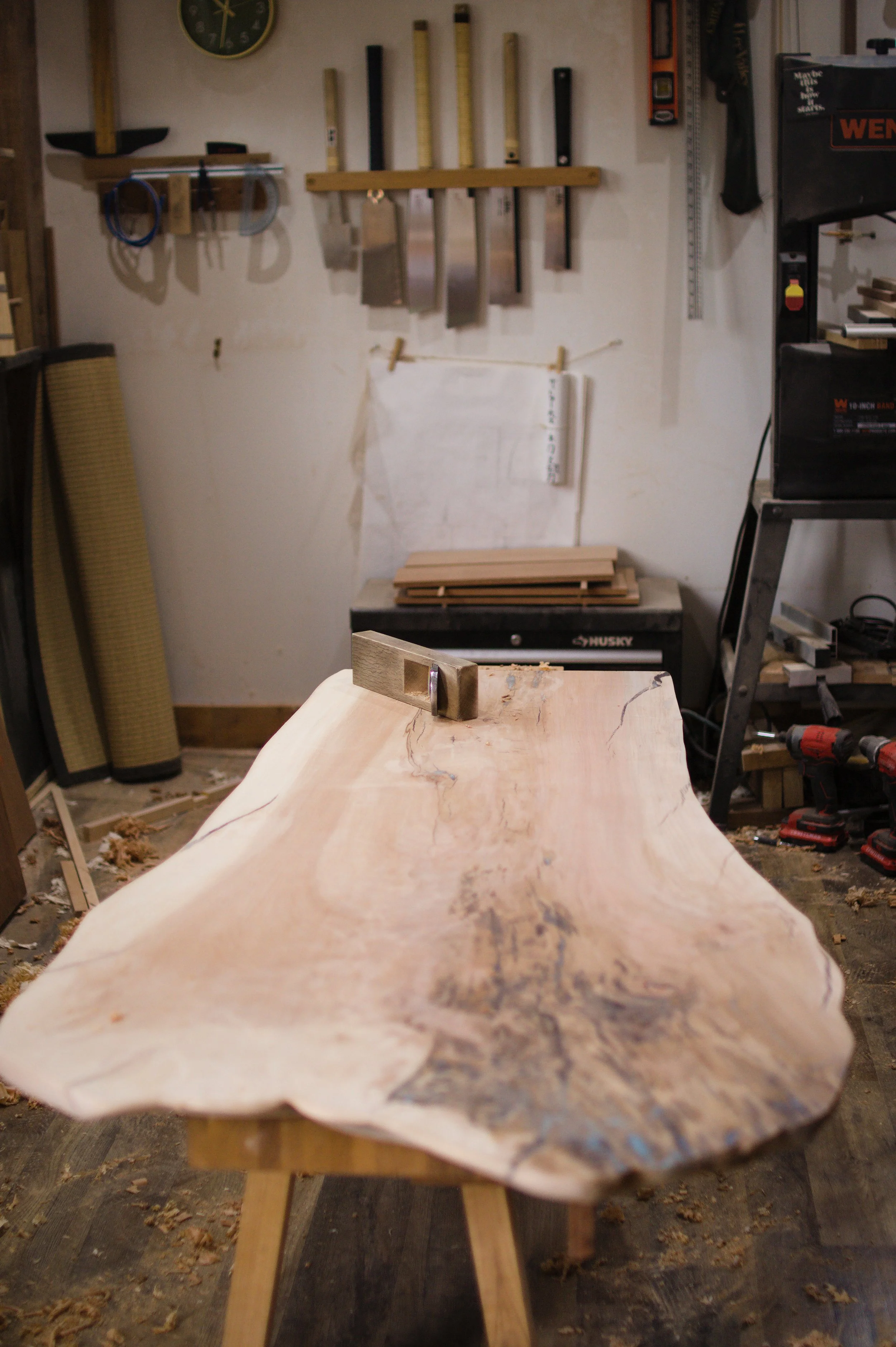
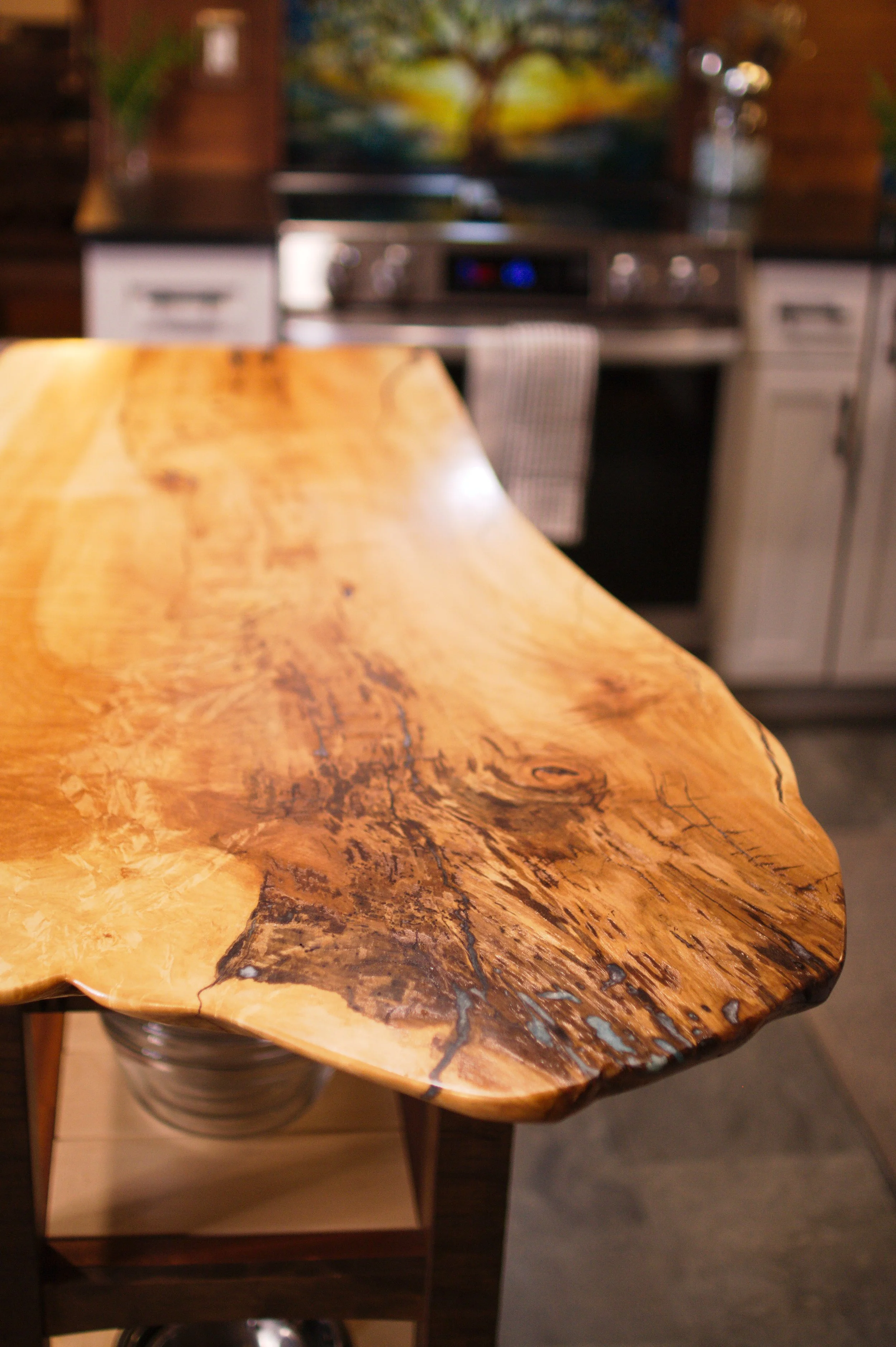
We were fortunate to find this spectacular local live edge piece of Silver Maple through an urban miller here in Colorado. It flares at one end, which they were hoping it would, so they could accommodate a stool or two, and presents some gorgeous dramatic grain, surprising figure, and tones of purple and pink that I don't normally find in maple. Of course, it also came riddled with splits, checks, and soft areas, which provided a plethora of challenges, or, as we prefer to call them, design opportunities.
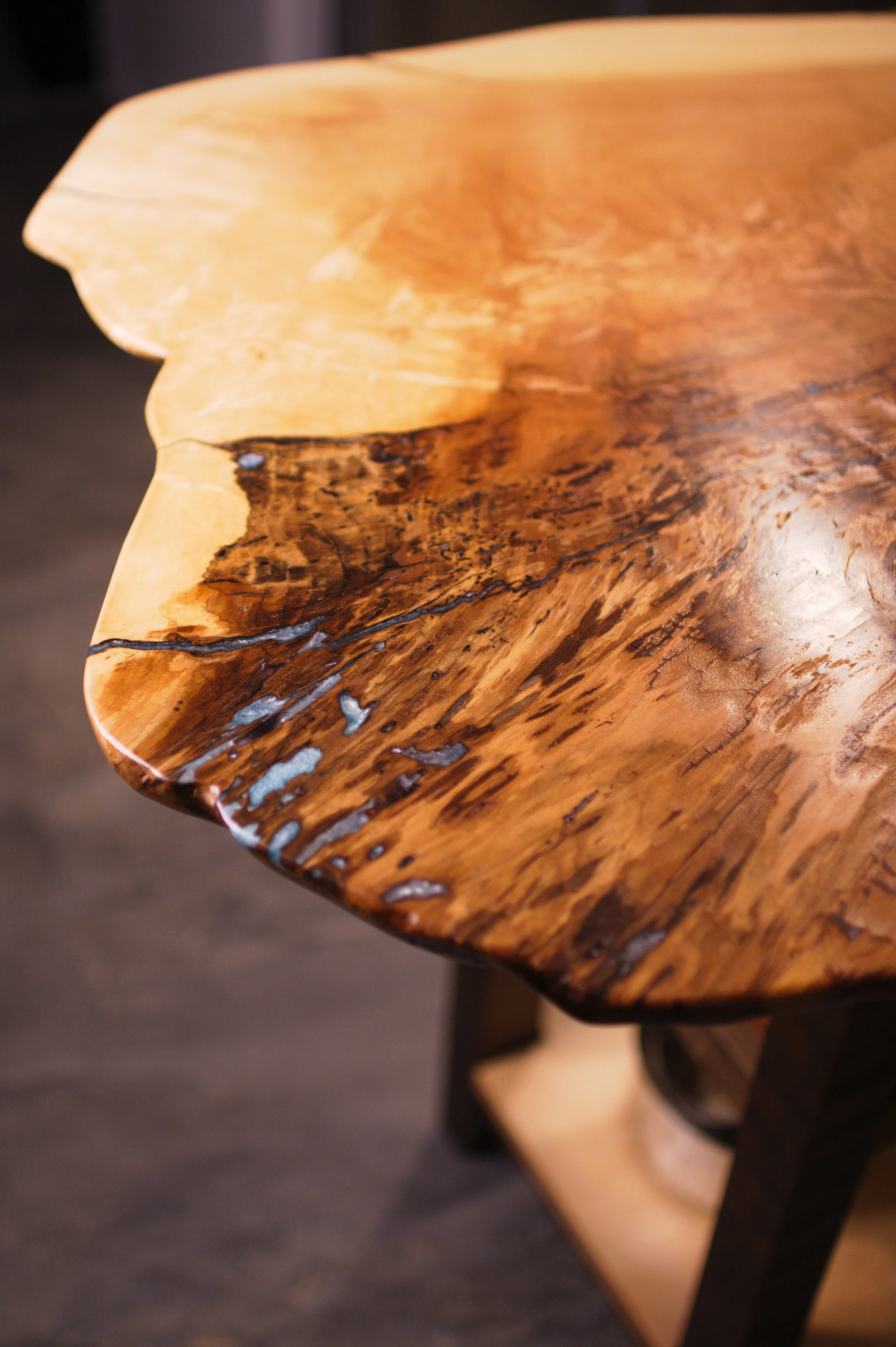
Imperfections in the tree provide an opportunity for splashes of color that play with other elements in the house.
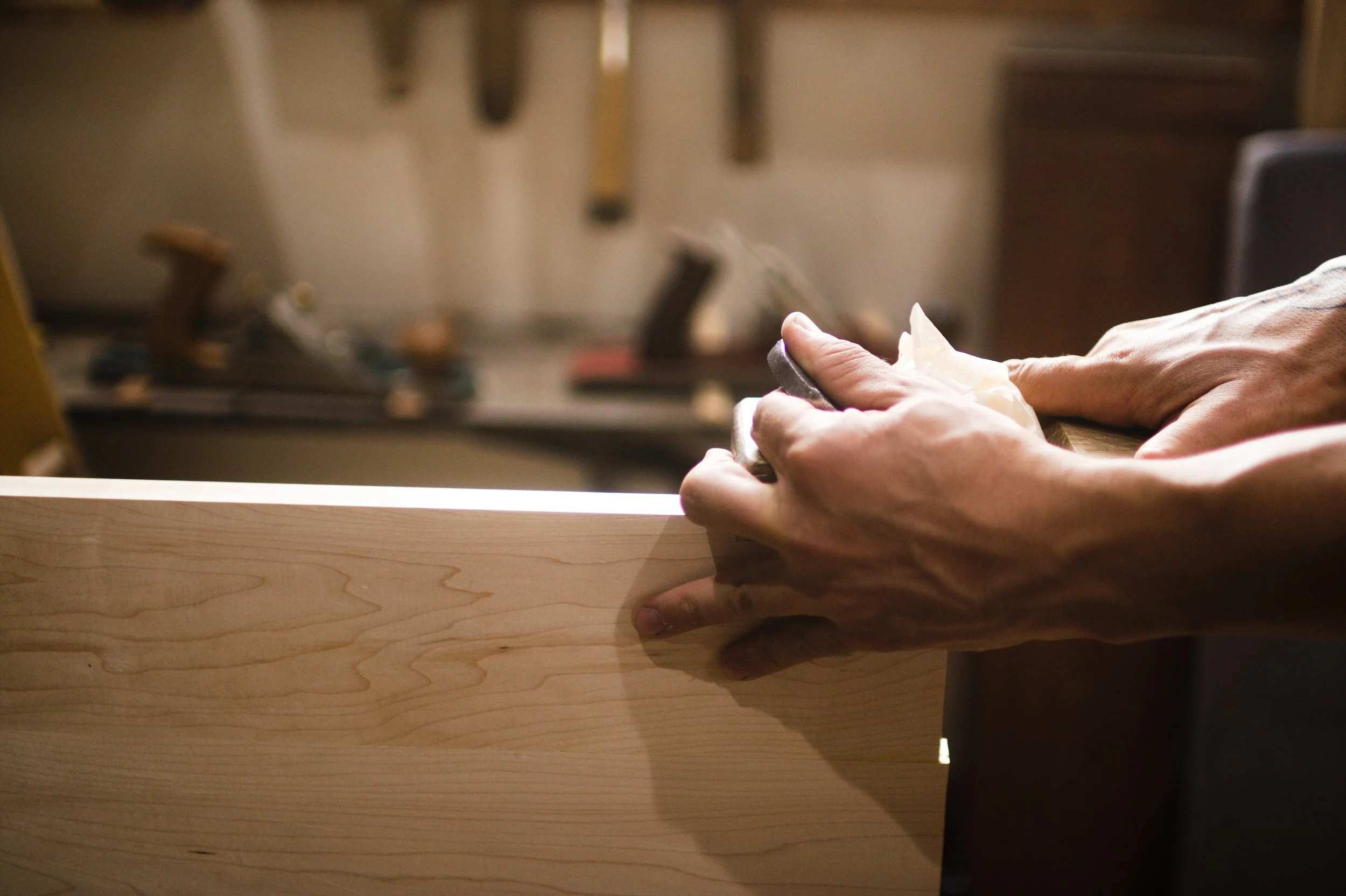
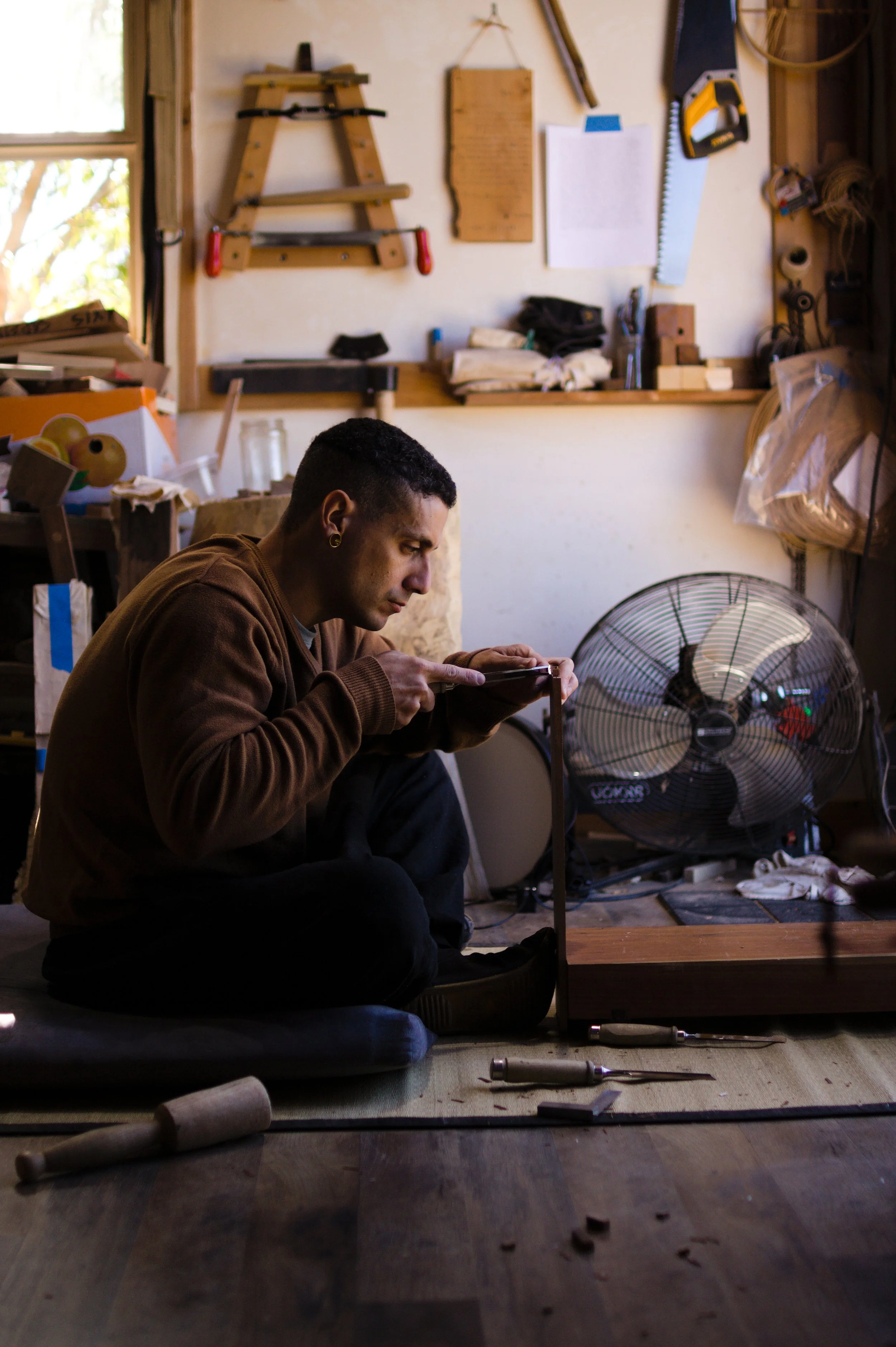
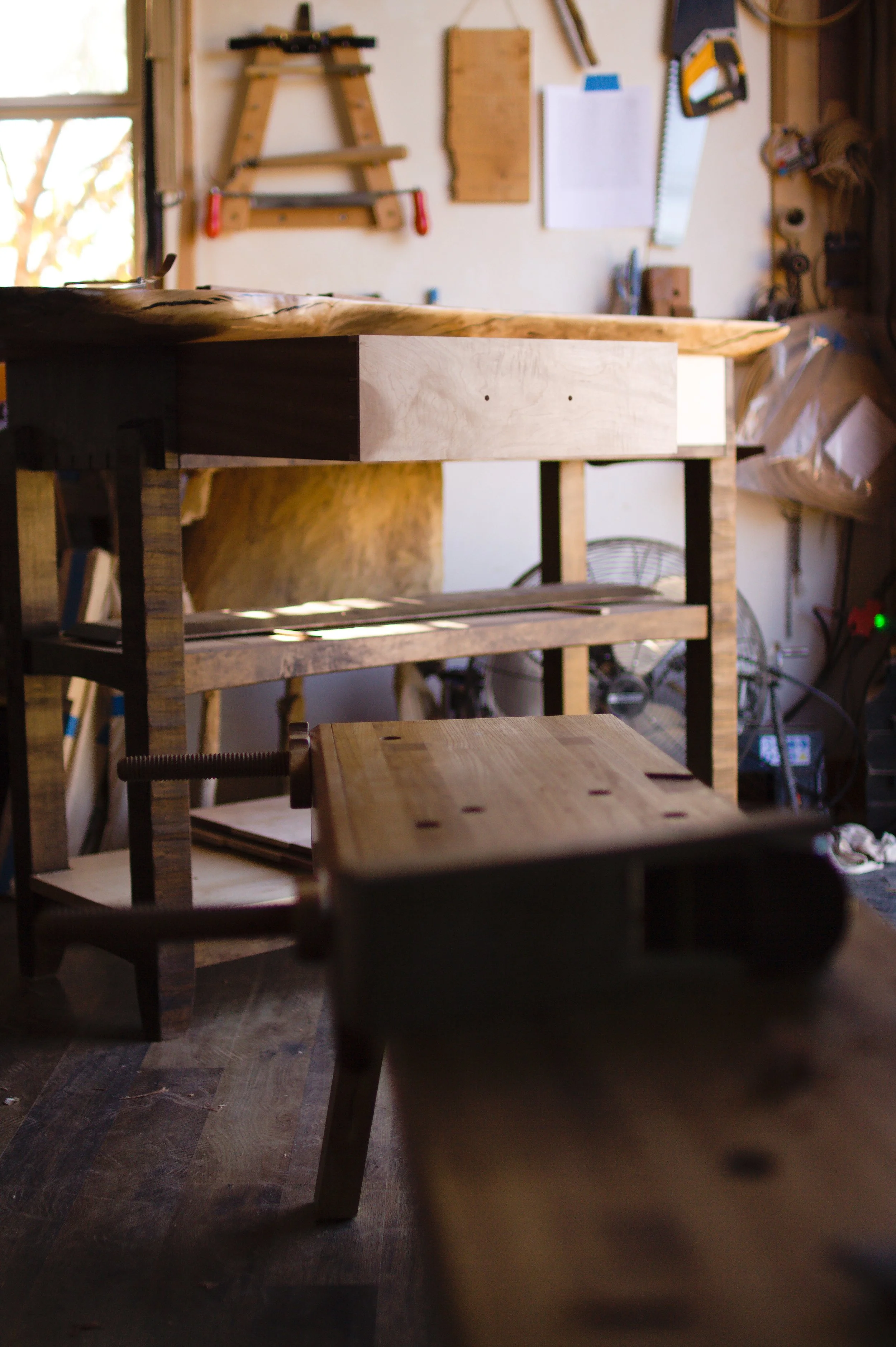
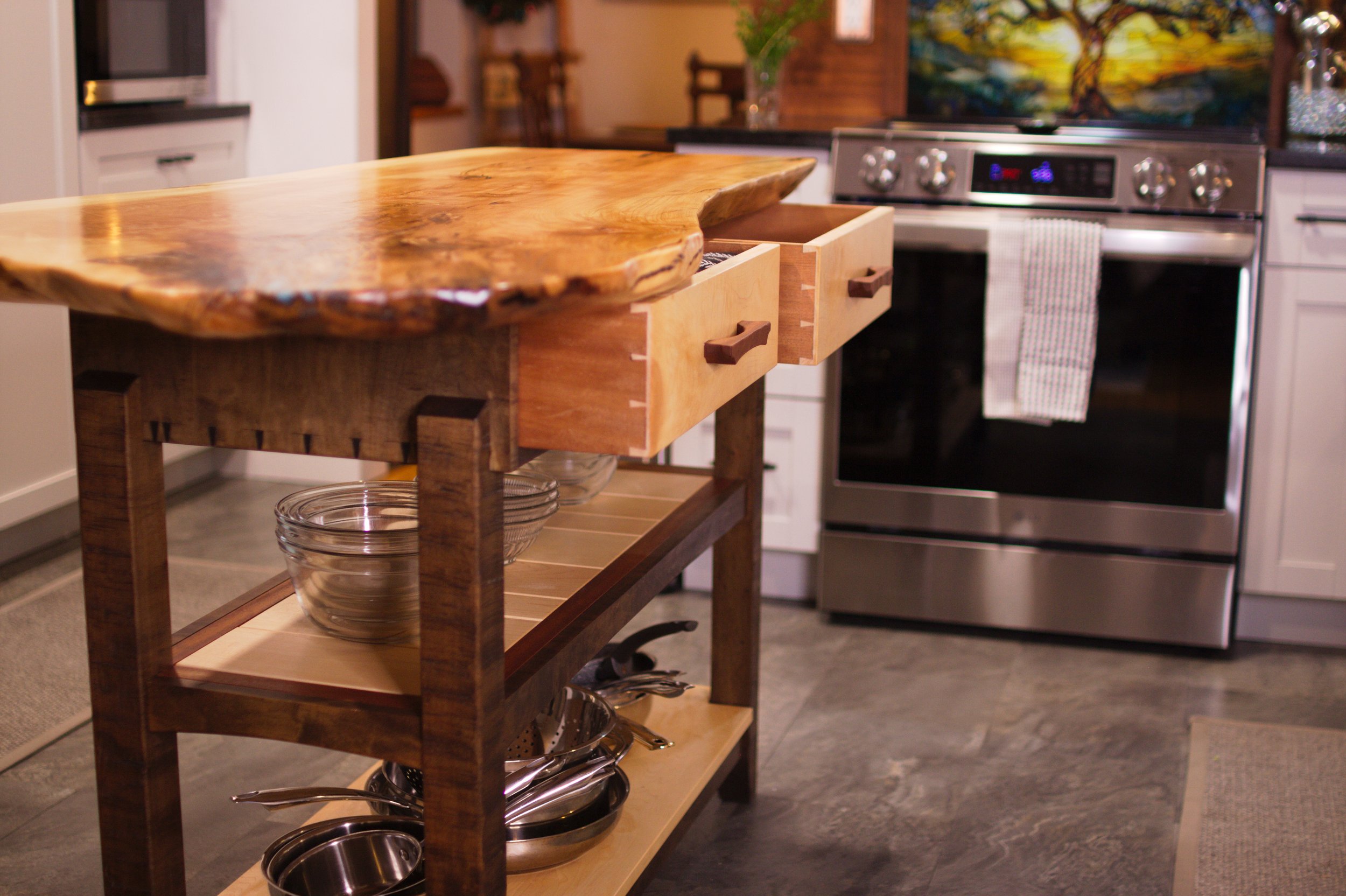
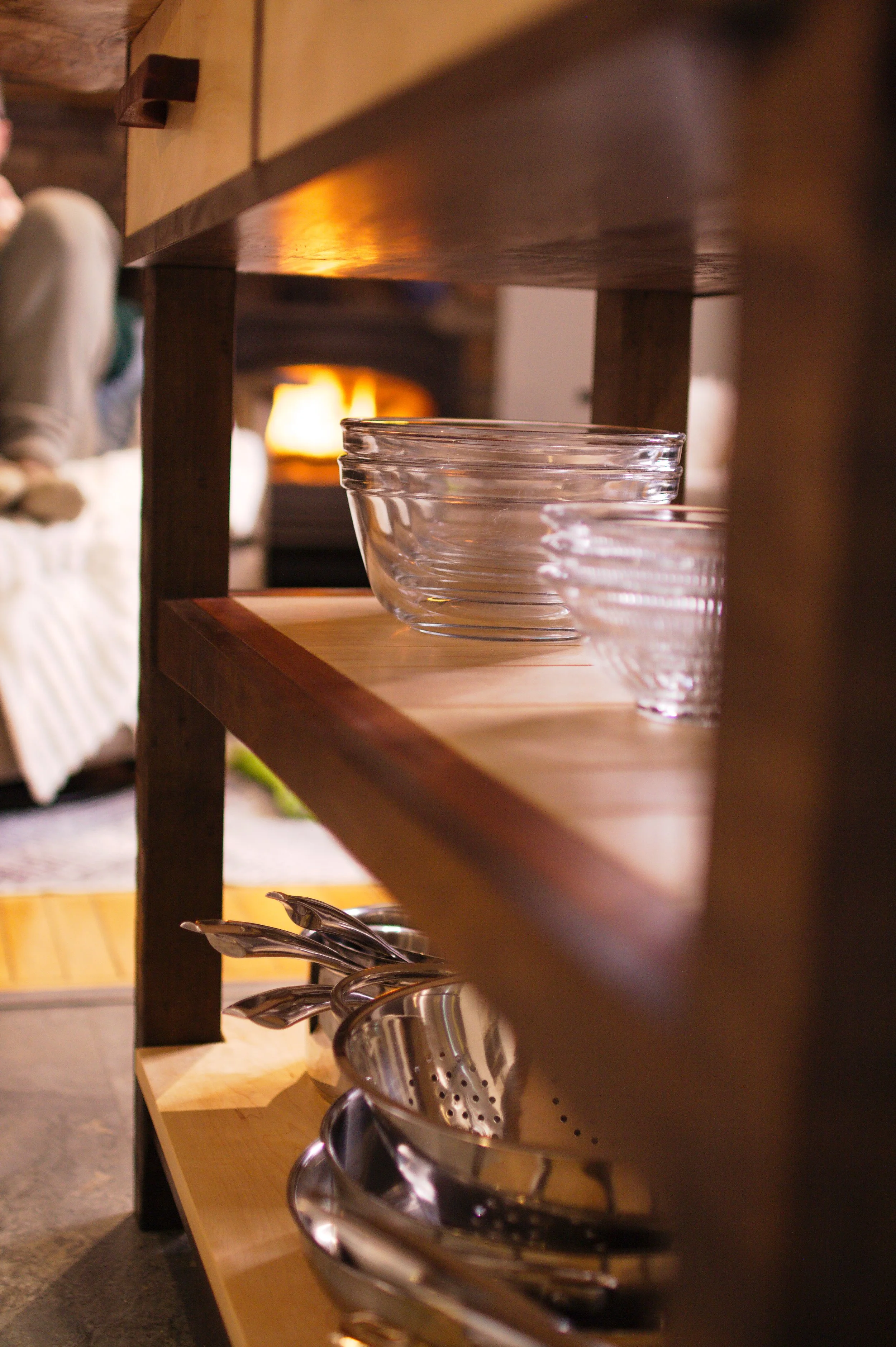
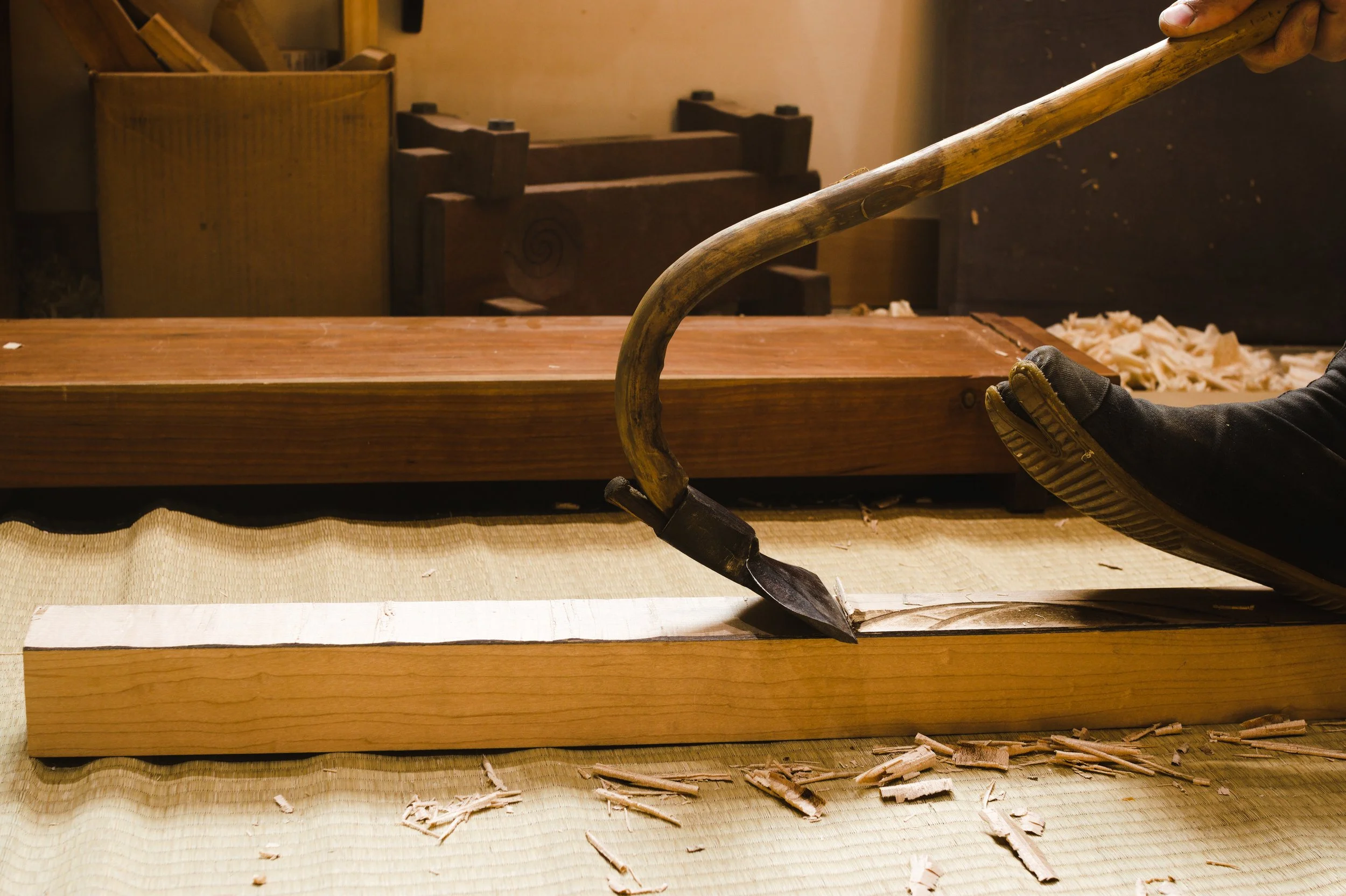
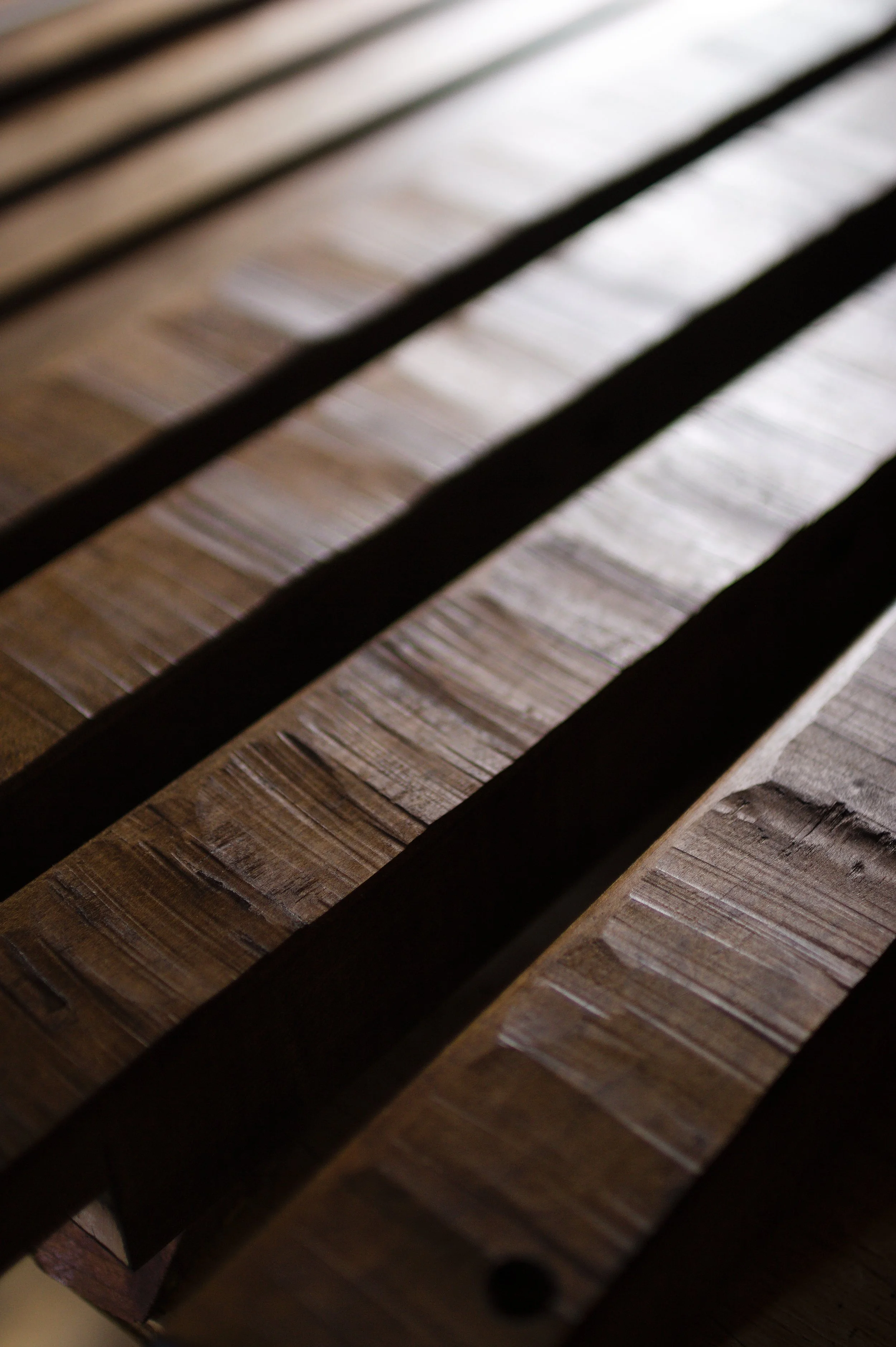
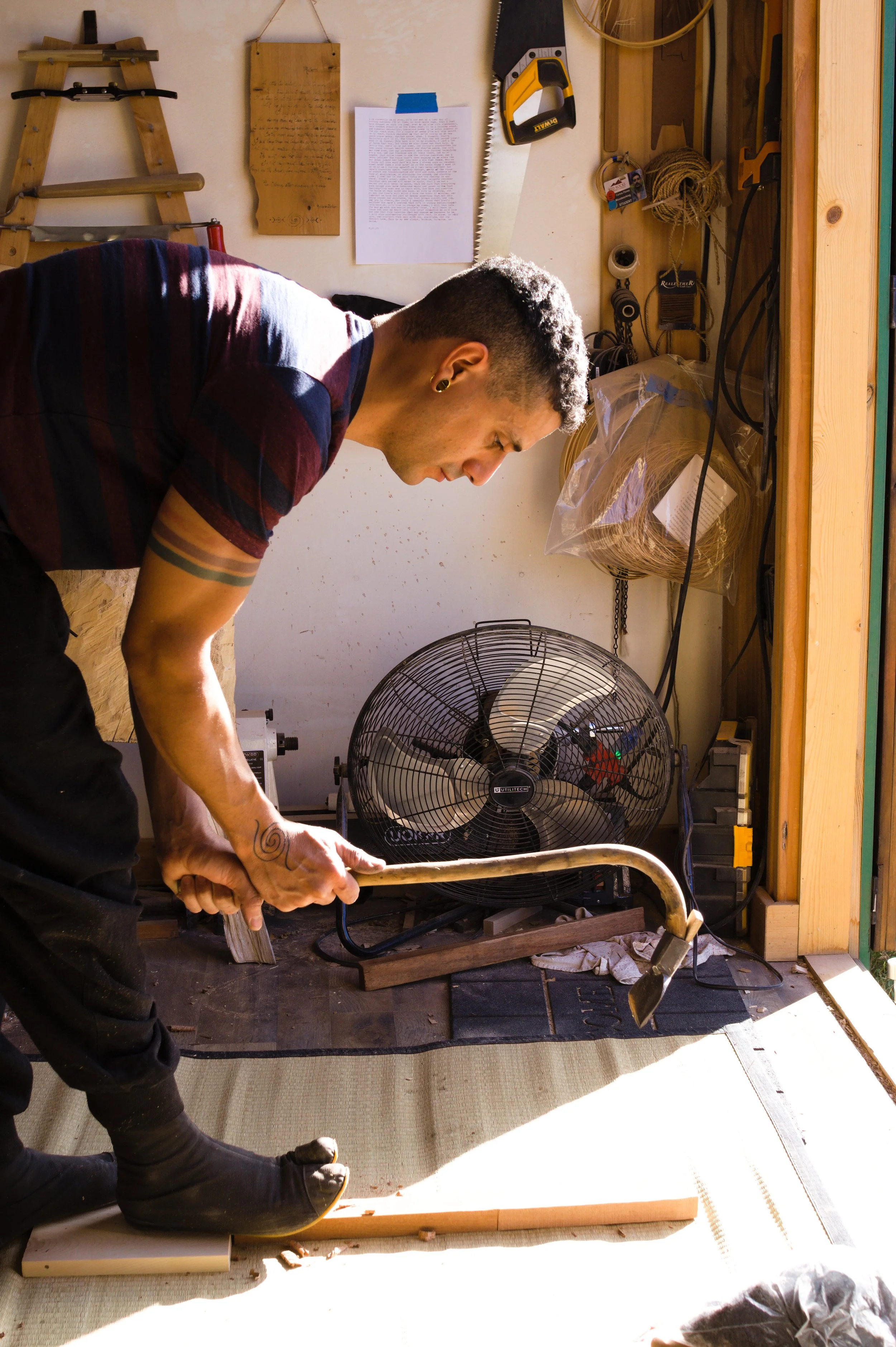
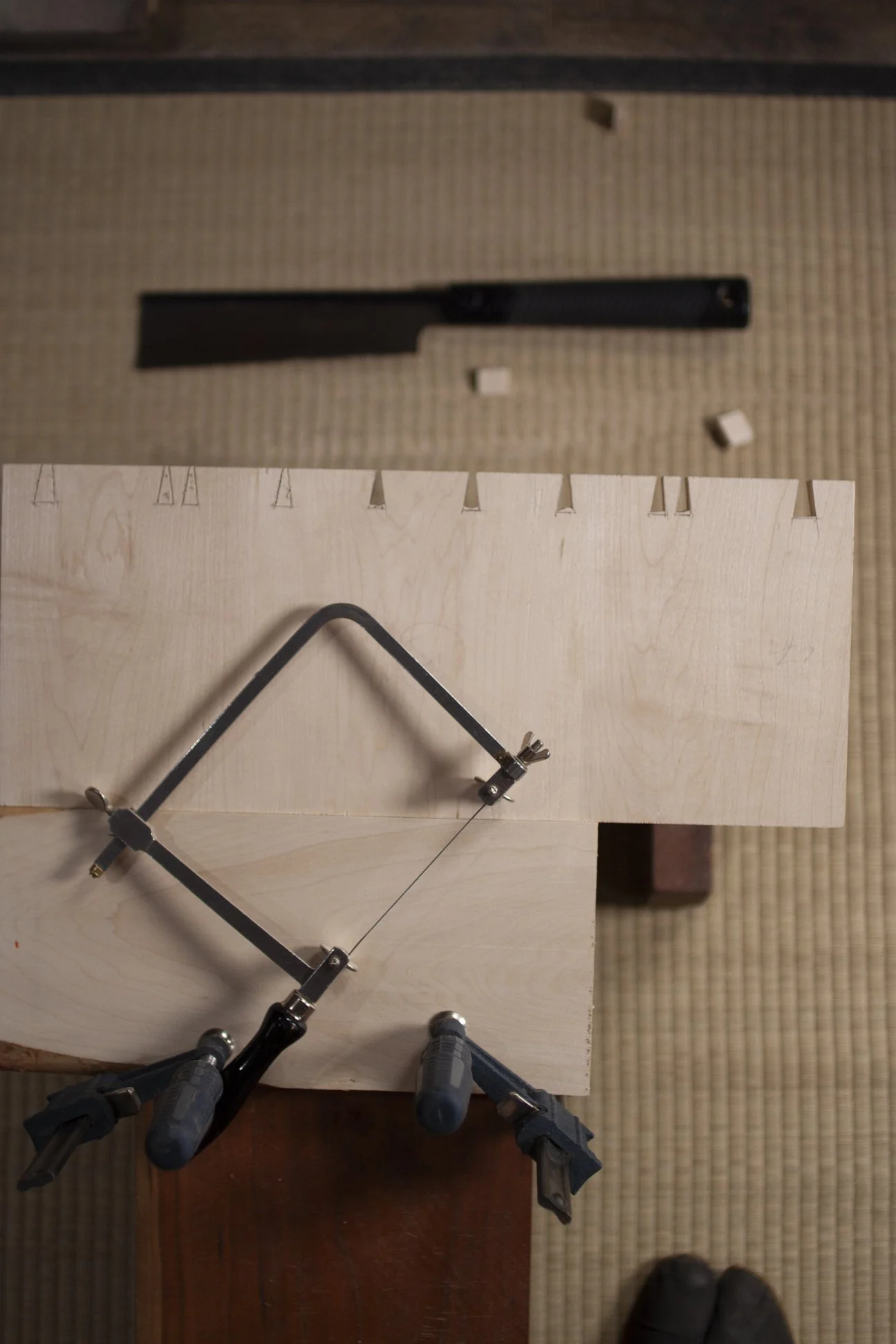
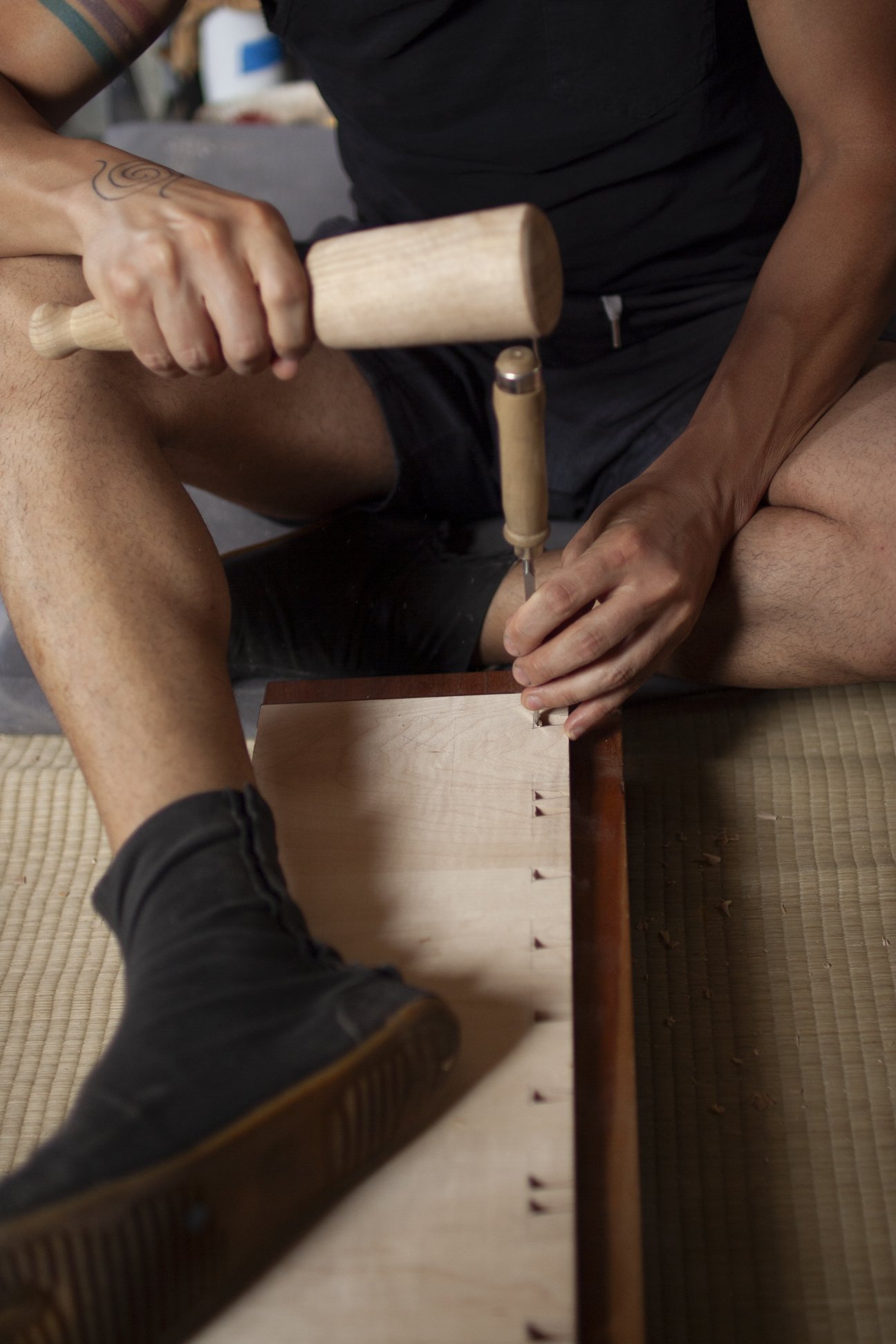
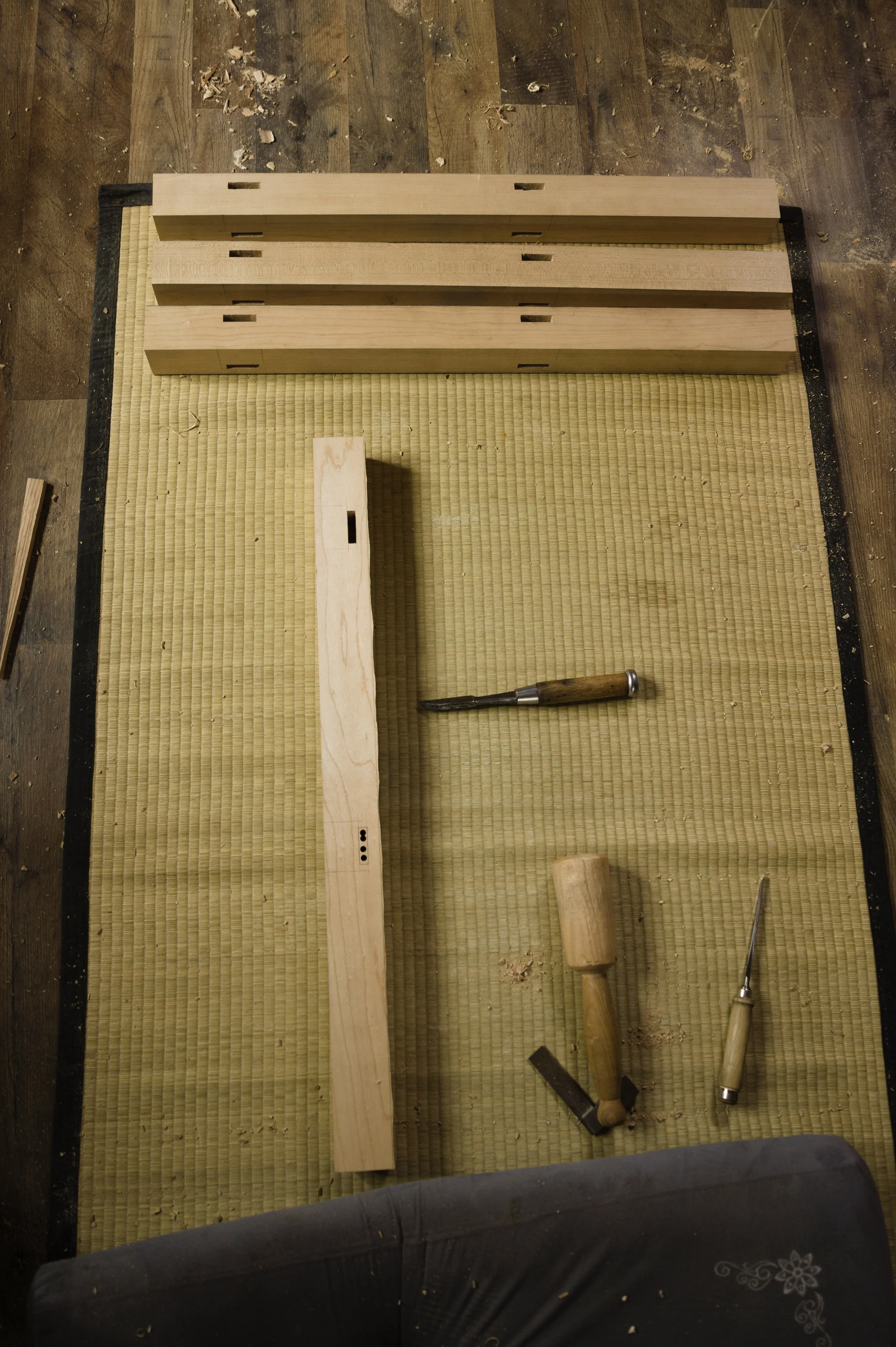
The rest of the design flowed down from the top piece. The live edge, carved legs and drawer pulls, and contrasts of Maple, ebonized Maple, and Sapele, add to the rustic side of the piece, while perfectly smooth surfaces, beveled details, dovetails, and spacious runner-kicker drawers work toward its refinement. Open shelving, with the top shelf being made of slats, open up the space where it could easily have been weighed down. As always, a lot of effort went into selecting grain throughout the piece, working the wood by hand, and cutting joinery by hand. The texture on the legs, back piece, and drawer pulls was made by chipping away at the wood with an antique Chouna--a beautiful Japanese adze I had shipped from the source specially for this project. This is a tool I would like to devote many years of practice to before calling myself particularly adept at using. In the right hands, it can leave an incredible, consistent, textured mirror finish. After many hours of practice, I managed to at least make something that feels purposeful and works with the rustic aspirations of the piece, and is lovely to run your hands over. And so, while there is still much work to be done regarding my skills on the Chouna, I am quite pleased with what it added to this piece.
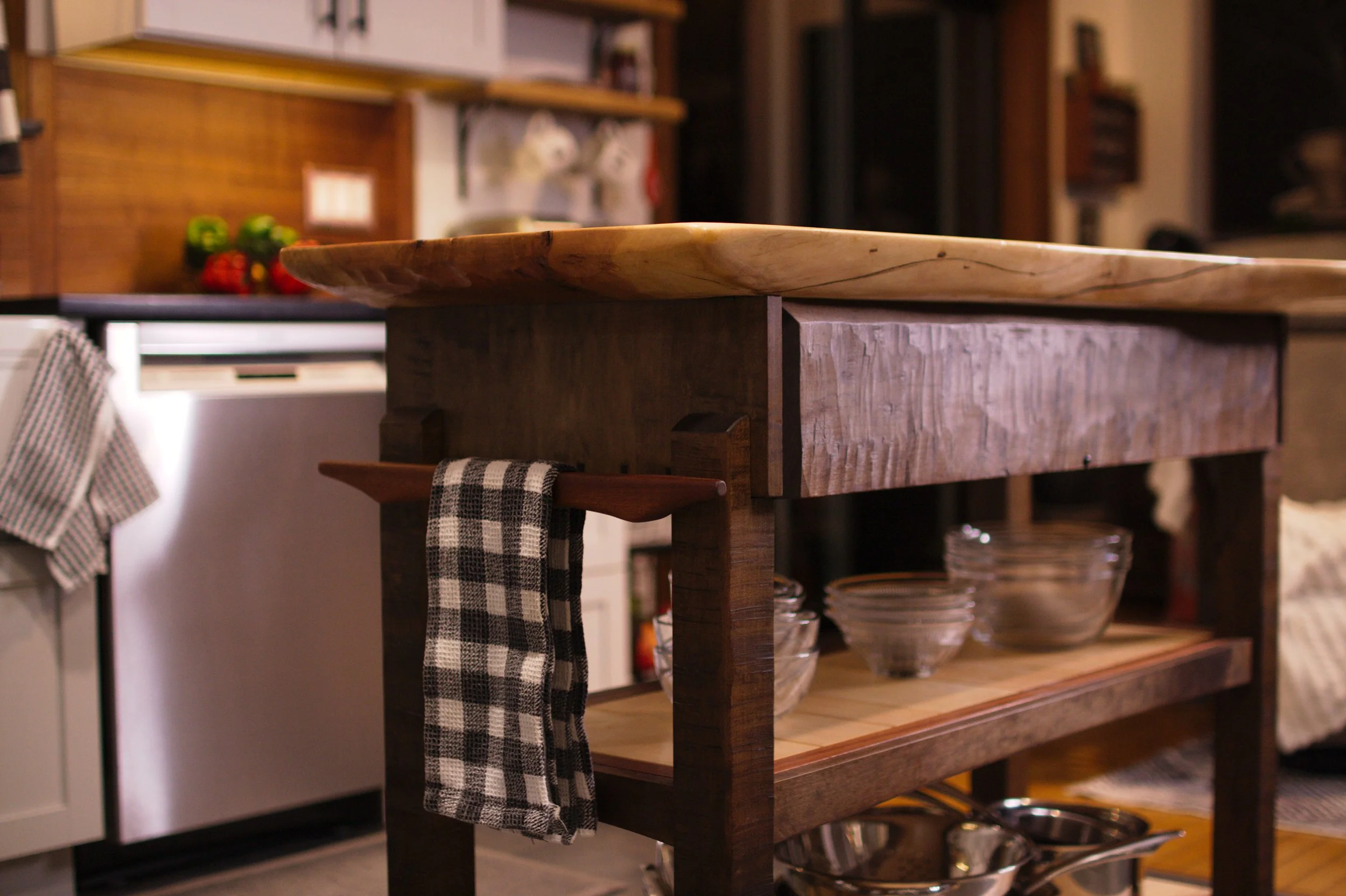
Even so, with the distance, I had questions about just how well the island would play in the space. And so, in addition to seeing my parents' faces when they came down to the kitchen the next morning and were surprised to see it there, in place, this was the biggest gift in delivering the island in person: I got to see my work in the space where it was meant to be, not just visually, but in action. A good piece of furniture, particularly one either designed for or specially selected for a space, works rather like an instrument in an acoustic hall; the instrument transforms the space, but the space also transforms the tone and effectiveness of the instrument. Despite having made such a conscious effort toward this end, I was shocked at how immediately the island felt at home there. "It looks like it grew right out of the kitchen floor, " my mother says, and I have to agree.
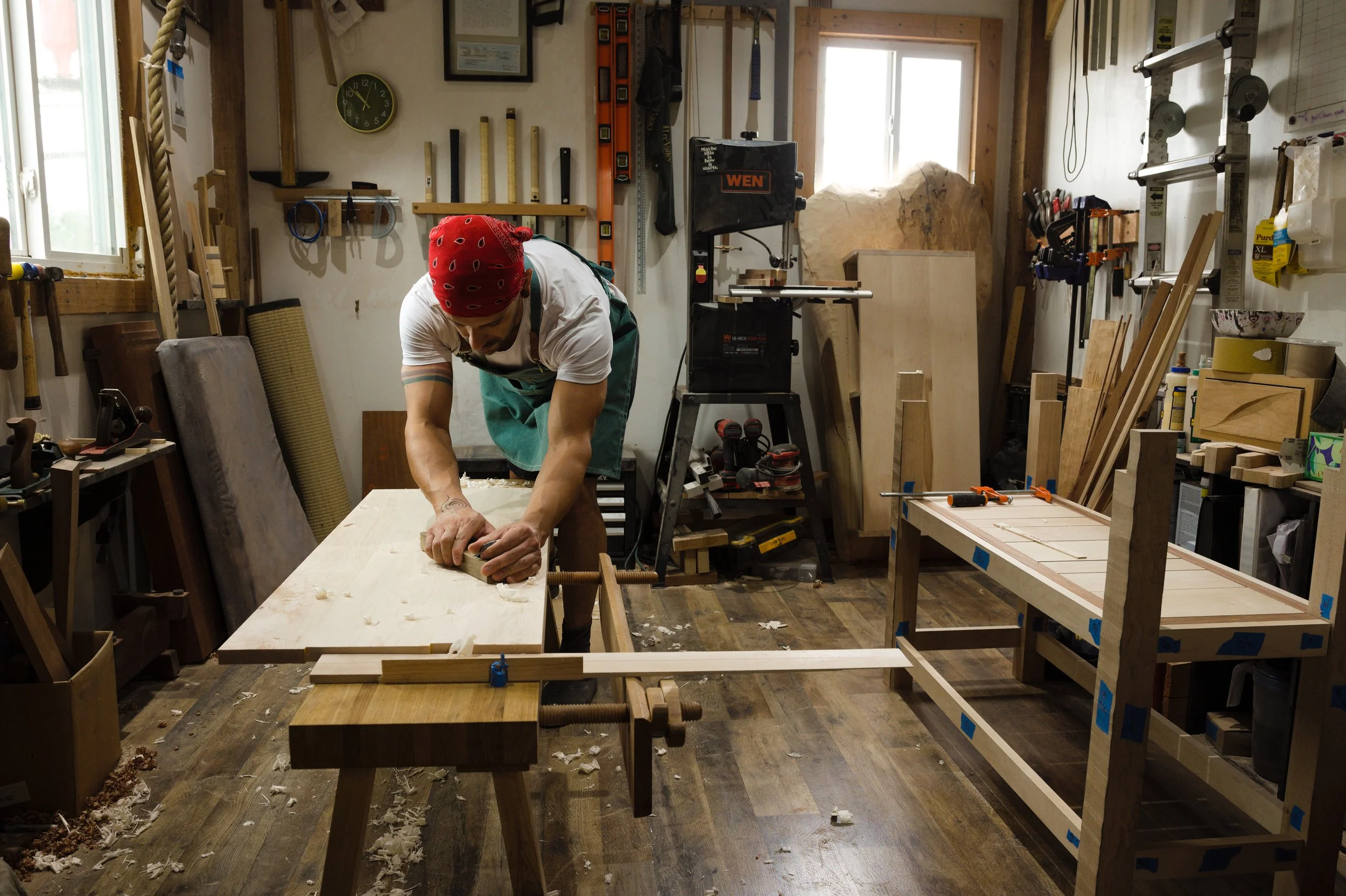
The second it was installed, it demanded to be used. With five of us in a small kitchen, somehow the flow never felt interrupted--rather, it felt easier and more natural to get around. I felt moved just watching my family gathered around it, preparing food, talking, and making jokes. Rarely do we as makers get the privilege of witnessing our pieces being used by their new owners. But that—what I saw—was precisely the reason I began my journey with this kind of work. To know first-hand that my intentions carved in wood are not an act of self-delusion, but are in fact a physical reality, is the greatest motivation. And as I face this new year, I do so with a revitalized sense of purpose in my vocation, and a clearer vision of the value I wish to bring to people's lives.